Reaper and BIAB are a great combo. All BIAB audio and/or midi tracks will "drag&drop" directly into Reaper. They both run concurrently (dual screens is nice) when you use ASIO in Reaper and MME in BIAB.
One question I have is: in BIAB I have the chord sheet. I understand Cubase now shows the chord info, does Reaper do the same?
The way I do it in Reaper is Snip a picture of the Chord Sheet from BIAB (Snipping Tool in Win 7 and above), then I simply paste it on a track in Reaper. The image appears on the Track and I can expand the track to a size which keeps the whole chord chart picture on the screen.
I run BIAB and Reaper together as this is my preferred method. I know there are fans of Realband but I find Reaper to be much more stable than Realband. I did miss the ability to regenerate specific bars in Realband for the real tracks but I now prefer to edit in Reaper. That being said here is my work flow with both. Beware it's lengthy, probably too long but if it helps then it's worth it, right?
I create the basic song format in BIAB as one continuous chorus. Once I'm satisfied including the ending I will drag and drop each individual track as a WAVE file either into a reaper project or into a source folder to add later. The beauty of BIAB and real tracks is that you can regenerate as many times as I want and save each rendered track as a wave. I usually generate multiple takes of the same instrument (sometimes up to eight) because I will usually edit them in Reaper. I also take the time to render other instruments because you never know. If you keep the song file open in BIAB while working in Reaper you can also test other instruments on the fly while working on the project in Reaper.
As far as editing, some may find my method a bit anal but it works for me and you may find a better way. Here's a sample on how I edit a guitar track. I first render the guitar track from BIAB with the DI option checked if it's available. I find you get a much more uniform sound if you add an amp simulator onto the Reaper track. You also have the option of using Amplitube in BIAB on a DI track and you can render from that. You will have more flexibility if you do it in Reaper though as your stuck with the rendered sound from BIAB.
I create several new empty tracks in Reaper and import each rendered track of the guitar track from BIAB on to each track. I then select and highlight all the tracks,right click to bring up the menu. There is an option to implode all selected tracks to takes on one track. Reaper will consolidate all the tracks on to one track as separate takes. You can now split the takes all at once however you want. I split every measure (sometimes each beat). Takes some time to do but the result is that when you press play you can audition each take separately selecting and building each piece as you go. It gives you much more control and creativity than regenerating in Realband and waiting for that to take place. You can truly come up with some unique tracks and it keeps you in a creative groove. It works great for drums,bass and piano too.
Then when your happy render the finished track and mute the original (keep the original!!!!). The rest of the work is done in Reaper. I will say this though do try to learn how BIAB works and how to use the bar settings. You can save yourself a lot of edit time by letting BIAB do some of the heavy lifting especially trying get holds, shots, rests and endings. This is an area I struggle with and need to spend more time learning myself.
This is but one of many ways to work with both programs together. Hopefully you can get some great ideas that will work for you.
Can some provide examples of how you use both apps?
One question I have is: in BIAB I have the chord sheet. I understand Cubase now shows the chord info, does Reaper do the same?
Reaper doesn't show chord information. You can easily create markers, but they have to be inserted manually.
I generally create my backing tracks in BiaB, and export the audio and MIDI to Reaper.
The way I think about editing in a DAW is slicing and dicing audio. That's my mental model, and Reaper supports that for me. I'm certainly not suggesting that's the only or best way to thing about things... Just the way I do it.
I'll often create multiple audio tracks for per instrument in BiaB. This may include tracks which contain only holds, multiple takes for one style, and even alternate styles for instruments (for example, different styles of playing for the bass).
BiaB supports drag-and-drop, but I'm stuck in my ways of just generating the part and saving a .wav file.
I'll then import all these tracks into Reaper. If I decide that I need additional tracks, I'll just go back into BiaB and generate some more.
From these tracks, I'll piece together the backing tracks. For example, I may decide I like a particular style on one section, or even insert holds on a measure-by-measure basis.
This workflow is especially helpful when creating a solo, because I can cut and paste parts from unrelated sections if I happen to like the figure, and re-pitch parts to make them fit. Extreme stretching is generally a bad thing, but it comes in handy on occasion. I've sliced parts down at the note level, and re-pitched them to make them work.
I'll typically do multiple takes for a vocal, and then slice-and-dice as necessary. This can involve moving and stretching backing vocals to align with the lead - especially when held notes don't quite go long enough.
The built-in Reatune pitch correction tool is great for fixing vocals - although it's always better to sing parts over again. It's also helpful for me to see where I'm scooping or simply singing the wrong note.
There's the general vocal clean up of removing noise, and reducing the volume on transients such as "P" and "S". Typically I'll slice the element to isolate it, and then adjust it (click the top of the track and drag down to scale the volume). This also works where the volume needs to come up - slice the element to isolate it, normalize that chunk, and then scale it down to fit.
Once everything has been cleaned up and normalized, I'll adjust the volume envelopes, turning down instruments under vocals, or in some cases removing them entirely in sections. Typically I'll create rather full backing tracks, and then aggressively turn down (or remove) tracks as much as possible on a section by section basis. I find it easier to create balance by removing than by adding.
I've skipped past EQ, effects and panning.
I don't think there's anything in Reaper that any other modern DAW doesn't have. For me, the workflow "works"... But a lot of people find doing it other ways makes just as much sense to them.
A lot of this stuff can be done in RealBand. But I like the level of editing that I can do in Reaper - I think it's a bit more detailed than RealBand provides.
The way I do it in Reaper is Snip a picture of the Chord Sheet from BIAB (Snipping Tool in Win 7 and above), then I simply paste it on a track in Reaper. The image appears on the Track and I can expand the track to a size which keeps the whole chord chart picture on the screen.
Dan,
Thank you for the above tip. I had no idea it was possible to do this.
The way I do it in Reaper is Snip a picture of the Chord Sheet from BIAB (Snipping Tool in Win 7 and above), then I simply paste it on a track in Reaper. The image appears on the Track and I can expand the track to a size which keeps the whole chord chart picture on the screen.
Dan,
Thank you for the above tip. I had no idea it was possible to do this.
Regards, Noel
Drag and drop a image file to an open track. Works like a charm.
Thanks Jeff and David for going into so much detail! Great tutorials actually. Trev
BIAB & RB2026 Win.(Audiophile), Windows 10 Pro & Windows 11, Cakewalk Bandlab, Izotope Prod.Bundle, Roland RD-1000, Synthogy Ivory, Session Keys Grand S & Electric R, Kontakt, Focusrite 18i20, KetronSD2, NS40M, Pioneer Active Monitors.
Snipping tool?? I have Win 7, did a search in Win and came up with: (see snapshot). Is this what you meant? I use HyperSnap for all my images (JPEG), I was not able to paste into Reaper.
Thanks.
Added text: PS Drag and Drop (image) worked.
Last edited by DEddy; 01/21/1509:21 AM. Reason: additional text
Win 10, 64 bit, love my Lenovo T420, BIAB 2019 (613), RB 2019 (2)
Thanks for the suggestion. Seemed like a good idea but ... didn't work .. the chord sheet never showed up in Reaper; just a blank green screen and all the tracks joined into one (expected).
Last edited by DEddy; 01/21/1509:34 AM. Reason: additional text
Win 10, 64 bit, love my Lenovo T420, BIAB 2019 (613), RB 2019 (2)
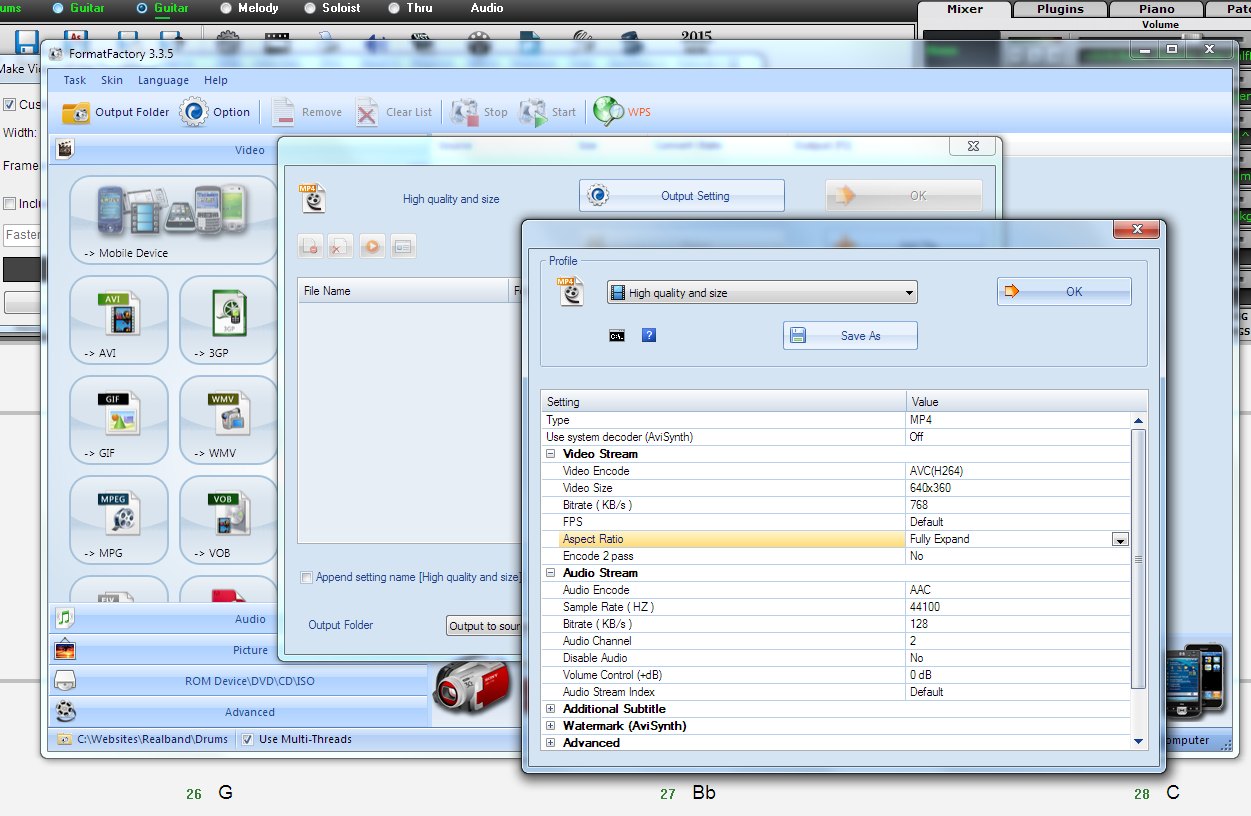
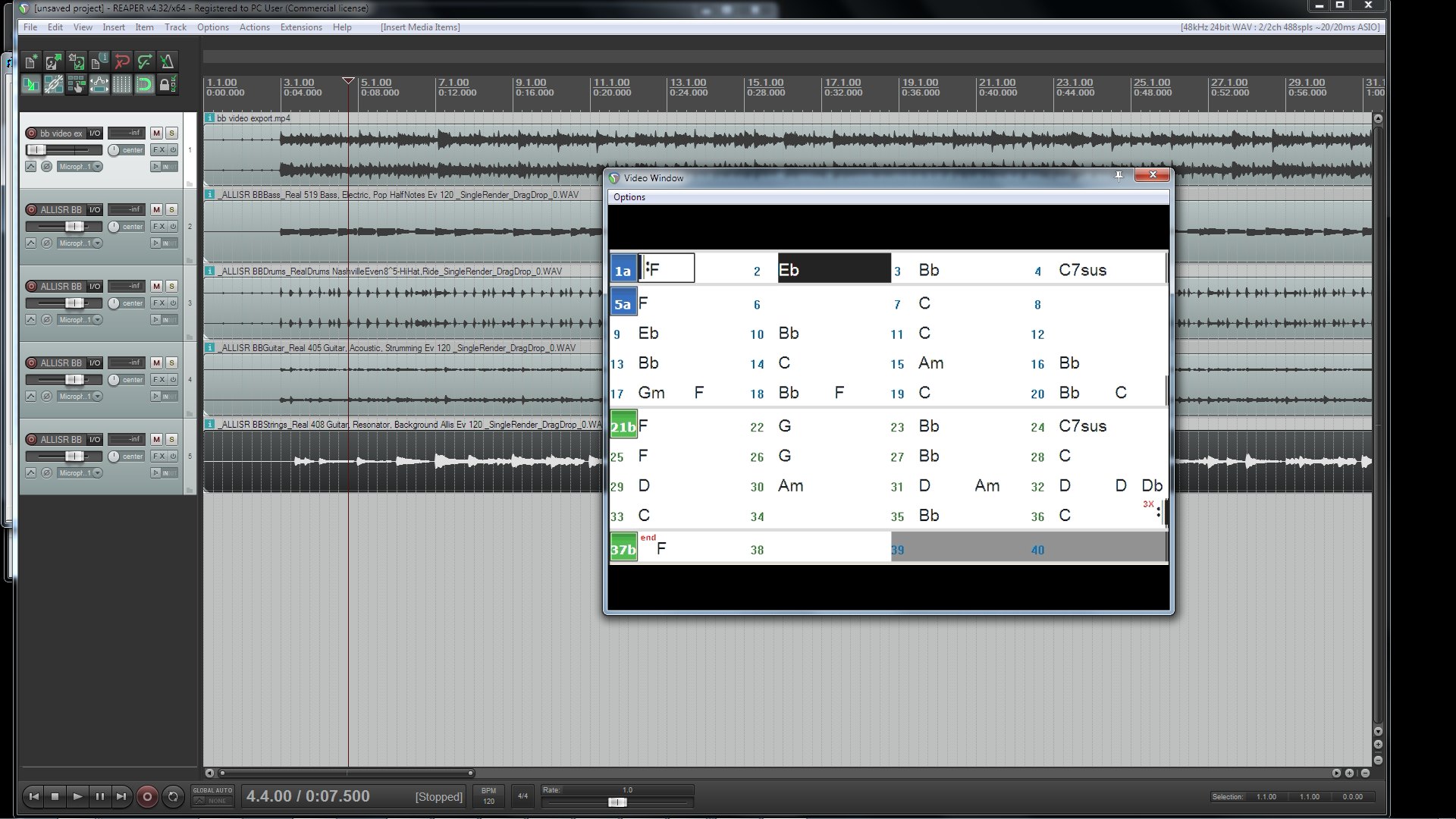
Chords in Reaper, just save your BB song to video, drag into Reaper, View > Video Window (Ctrl+Shift+V)
Originally Posted By: DEddy
Solidrock, re: save your BB song to video
Thanks for the suggestion. Seemed like a good idea but ... didn't work .. the chord sheet never showed up in Reaper; just a blank green screen and all the tracks joined into one (expected).
If you go to > Task > Options > Advanced > Add to Systrm Context Menu. This will give you a right click menu for Format Factory. * Skip the "Toolbar" Extras during Install.
Reaper will cut and paste the video also in editing so the bars in the video will follow.
To get a linear chord sheet flow in BB > Edit > Unfold
Drag the MP4 in Reaper and turn the Volume DOWN don't Mute !
Drag the individual Audio and/or midi tracks into Reaper.
Unfortunately, not near my DAW at this time so you have to trust me on this. Place any jpg file on your desktop then Drag and Drop onto a blank track in Reaper. Should work, and look nice.
zplane recently interviewed Peter Gannon, the founder and creator of Band-in-a-Box, about the software's early days, what sets it apart from AI, how zplane's audio algorithms are used in Band-in-a-Box, and more!
Special thanks to the team at zplane for their continued support.
Last Chance! The Band-in-a-Box® 2026 for Mac® Special Ends Today (May 31, 2026) at 11:59pm PDT!
Time really is running out! Save up to 50% on Band-in-a-Box® 2026 for Mac® upgrades and receive a FREE Bonus PAK—only when you order by 11:59 PM PDT today!
We've added many major new features and new content in a redesigned Band-in-a-Box® 2026 for Mac®!
Version 2026 introduces a modernized GUI redesign across the program, with updated toolbars, refreshed windows, smoother workflows, and a new Dark Mode option. There’s also a new side toolbar for quicker access to commonly used windows, and the new Multi-View feature lets you arrange multiple windows as layered panels without overlap, making it easier to customize your workspace.
Another exciting new addition is the amazing new AI-Notes feature, which can transcribe polyphonic audio into MIDI. View the results in notation or play them back as MIDI, and choose whether to transcribe an entire track or transcribe specific parts like drums, bass, guitars/piano, or vocals. There's over 100 new features in Band-in-a-Box® 2026 for Mac®.
There's an amazing collection of new content too, including 202 RealTracks, new RealStyles, MIDI SuperTracks, Instrumental Studies, “Songs with Vocals” Artist Performance Sets, Playable RealTracks Set 5, two RealDrums Stems sets, and much more!
Upgrade your Band-in-a-Box for Mac® to save up to 50% on most Band-in-a-Box® 2026 upgrade packages!
Plus, when you order your Band-in-a-Box® 2026 Mac upgrade during our special, you'll receive a Free Bonus PAK of exciting new add-ons.
If you need any help deciding which package is the best option for you, just let us know. We are here to help!
Band-in-a-Box® 2026 Mac Special Offers Extended Until May 31st!
Good news- we've extended our Band-in-a-Box® 2026 for Mac® special offers until May 31, 2026!
Band-in-a-Box® 2026 is packed with major new features, enhancements, and an incredible lineup of new content! The program now sports a sleek, modern GUI redesign across the entire interface, including updated toolbars, refreshed windows, smoother workflows, a new dark mode option, and more. The brand-new side toolbar provides quicker access to key windows, while the new Multi-View feature lets you arrange multiple windows as layered panels without overlap, creating a flexible, clutter-free workspace. We have an amazing new “AI-Notes” feature. This transcribes polyphonic audio into MIDI so you can view it in notation or play it back as MIDI. You can transcribe an entire track (all pitched instruments and drums) or focus on individual parts like drums, bass, guitars/piano, or vocals. There's an amazing collection of new content too, including 202 RealTracks, new RealStyles, MIDI SuperTracks, Instrumental Studies, “Songs with Vocals” Artist Performance Sets, Playable RealTracks Set 5, two RealDrums Stems sets, and much more!
There are over 100 new features in Band-in-a-Box® 2026 for Mac®.
When you order purchase Band-in-a-Box® 2026 before 11:59 PM PDT on May 31st, you'll also receive a Free Bonus PAK packed with exciting new add-ons.
Check out the Band-in-a-Box® for Mac packages page to find the best package for you.
Today's the Last Day of the Band-in-a-Box 2026® for Mac Special!
Order before 11:59pm PDT today (May 15, 2026) to save up to 50% off your Band-in-a-Box® 2026 for Mac® upgrade and receive a FREE Bonus PAK loaded with great new Add-ons to use with this new version!
Band-in-a-Box® 2026 for Mac - Special Offers End at 11:59pm PDT on Friday, May 15th, 2026!
Order before 11:59pm PDT on Friday, May 15th and SAVE up to 50% on most Band-in-a-Box® version 2026 for Mac Upgrade packages... and that's not all! With your version 2026 for Mac purchase, we'll include a Bonus PAK full of great new Add-ons FREE! Upgrade to the 2026 49-PAK to receive even more NEW Add-ons including 20 additional RealTracks... that's 222 NEW RealTracks available with version Band-in-a-Box® 2026 for Mac!
Upgrade to Band-in-a-Box® 2026 for Mac® today for as little as $49! Check out the Band-in-a-Box® packages page for all available purchase options.
Learn more about the Free Bonus PAK and 49-PAK here.
If you have any questions about which package is the best option for you, just let us know. We're here to help!
202 New RealTracks Released with Band-in-a-Box 2026!
With Band-in-a-Box® 2026, we've released 202 incredible new RealTracks (in sets 468-488) in a variety of genres—featuring your most requested styles!
Jazz, Funk & World (Sets 468-475):
Our new jazz, funk & blues RealTracks include a groovin’ collection of RealTracks and RealDrums! These include more requested “soul jazz” RealTracks featuring artists Neil Swainson (bass), Charles Treadway (organ), Brent Mason (guitar), and Wes Little (drums). There are new “smooth jazz” styles (4), which include a RealTracks first: muted trumpet, as well as slick new smooth jazz brushes options for drums. Blues lovers will be thrilled—there are more “classic acoustic blues” styles, including guitar (5), bass (4), and drums (10) with blues master Colin Linden, featuring understated and tasty background acoustic soloing, plus brushes drums and acoustic bass. There are also new electric blues RealTracks, including electric blues with PG favorite Johnny Hiland (3) and soulful electric slide guitar from Colin Linden (4). If you love funk & gospel, there are great new options this year, including gospel organ (3) from Charles Treadway, as well as new funk, tango, and rock ’n’ roll drums (3) and bass (1). And for big, bold arrangements, we have uptempo soul horns (4) featuring a three-part hip horn section with options for a full mix or stems of each individual horn — plus an accompanying rhythm section (4) of drums, bass, guitar, and electric piano!
Rock & Pop (Sets 476–482):
Our new rock & pop RealTracks bring a powerful mix of requested favorites, fresh genres, and modern chart-inspired styles! We have more of our popular “Producer Layered Acoustic Guitars (15)” featuring Band-in-a-Box favorite Brent Mason. We’ve continued our much-requested disco styles (10), and added new Celtic guitar (5) with a more basic, accessible approach than our previous Drop-D or DADGAD offerings. There are also highly requested yacht rock styles (17), inspired by the smooth, polished soft-rock sound of the late ’70s and early ’80s — laid-back grooves, silky electric pianos, warm textures, elegant harmonic movement, and pristine production aesthetics. Fans of heavier styles will love our new glam metal (13), capturing the flashy, high-energy sound of ’80s arena-ready guitar rock. We also have a set of rootsy modern-folk rock (18), with a warm, organic sound combining contemporary folk textures and driving acoustic strumming. And we’ve added lots of new modern pop styles (16) — the kinds of sounds you’re hearing on the radio today, featuring exciting new drums, synths, and cutting-edge RealTracks arrangements.
Country, & Americana (Sets 483–488):
Our new country & Americana RealTracks deliver a rich collection of acoustic, electric, and roots-inspired styles! We have new country pop (9) with legendary guitarist Brent Mason. There is also a potpourri (14) of bouzouki, guitars, banjo, and more, perfect for adding texture and character to contemporary acoustic arrangements. We’ve added funky country guitar (5) with PG favorite Brent Mason, along with classic pedal steel styles (5) featuring steel great Doug Jernigan. There are more country songwriter styles (8) that provide intimate, rootsy foundations for storytelling and modern Americana writing. Finally, we have “background soloing” acoustic guitar (12) with Brent Mason — simpler, but still very tasty acoustic lines designed to sit beautifully behind vocals or act as a subtle standalone solo part.
And, if you are looking for more, the 2026 49-PAK (for $49) includes an impressive collection of 20 bonus RealTracks, featuring exciting and inspiring additions to add to your RealTracks library. You'll get new country-rhythm guitar styles from PG Music favorites Johnny Hiland and Brent Mason, along with modern-pop grooves that capture today’s radio-ready sound! There are also new indie-folk styles with guitar, bass, 6-string bass used as a high-chording instrument, acoustic guitar, and banjo. Plus, dedicated "cymbal fills" RealDrums provide an added layer that work very well with low-key folky styles with other percussion.
The 2026 49-PAK is loaded with other great new add-ons as well. Learn more about the 2026 49-PAK!
One of our representatives will be happy to help you over the phone. Our hours of operation are from
6:00AM to 6:00PM PST (GMT -8) Monday thru Friday, and 8:00AM to 4:00PM PST Saturday. We are closed Sunday. You can also send us your questions via email.
One of our representatives will be happy to help you on our Live Chat or by email. Our hours of operation are from
6:00AM to 6:00PM PST (GMT -8) Monday thru Friday; 8:00AM to 4:00PM PST (GMT -8) Saturday; Closed Sunday.






 Dansk
Dansk Deutsch - Windows
 Español
 Français - Windows
 Italiano - Windows
 Nederlands
 Polski
 Português
 Svenskt
 русский
 Japanese
 Simplified Chinese
 Traditional Chinese
 Korean