|
Log in to post
|
Print Thread |
|
|
|
|
|
RealBand
|
Joined: Aug 2011
Posts: 289
Apprentice
|
OP

Apprentice
Joined: Aug 2011
Posts: 289 |
Hi all. This is a pretty standard question but it's puzzling me a little. I've created some top notch backing tracks using realband and realtracks and I've loaded them up onto my Ipad so that I can play them as backing for my guitar / vocal act. Some of them are quieter than others, which is a bit of a pain as it means I have to remember which ones need turning up / which ones down and which ones are just right (Goldilocks levels you could say). I've tried normalising them but of course, whatever is the highest existing peak on the waveform can restrict the amount of change. E.g., there is invariably a cymbal crash that for some reason wants to be Mount Everest. Now, I've tried compression (in a DAW), but that is a something of a ticklish business because I've a feeling that the Realtracks have already been mastered (I'm not using the more expensive wave files). What does everyone else do ? Cheers Mike. www.Blues-House.com
|
|
|
|
|
|
|
|
|
|
|
|
|
RealBand
|
Joined: Dec 2005
Posts: 4,047
Veteran
|
|
Veteran
Joined: Dec 2005
Posts: 4,047 |
Mike,
A general answer.
When getting into "serious" mixing:
1. Go to the Showcase site and listen, listen, listen to the
music placed there.
This alone is/was invaluable to me anyway. They do use primarily PG Music goodies.
Discount the genre when listening, many of same mix rules would apply across several genre's.
Some amount of mixes, did not care for, but reason was my listening was wrong.
You have to listen to each of the presentors individual tracks as they play thru the music.
Listened to music all my life, hence why re-learn how to listen.
Being able to pick out specific parts of the music is a great guide to your
own mix.
Also based on reading folks on the "Forums", they do give a lot of excellent advice.
Probably not a new word, but been using the word "earring". My version of how to listen
to each song and track within that song.
This is a non-stop ongoing learning process.
Also based on advice from other member purchase a very good set of "Studio" headphones.
Before this, had no idea of the difference in the Hphones.
Also having a very good quality of Monitor speakers is crucial. Based on reading forums.
The work-flow being used by folks would vary from person to person.
Here, create the music in BIAB.
Save As Wav file clicking Normalize, and also all tracks. Normalize here maybe point of contention with some folks.
From Win 7 open window containing all the music tracks, drag/drop them into RB.
You can also do this directly from BIAB.
SaveAs a raw music file upon drag and drop completion.
Then solo melody/dominant/primary track.
Then Highlight 8-10 measure of initial melody or dominant track(will call primary now on)
along with all of the music tracks.
This gives you ability to listen and listen to the mix for initial primary start.
Set primary volume level... This level usually monitor by Hphone and also the
meter on bottom of the screen.
Next add specific track/s you want to listen to one at a time. Usually here,
in initial mix use primary with one support track at a time. Gives me a grasp of
sounds.
In your case with backing tracks, probably no melody(now primary), so pick out dominant track
to mix against.
Once each track is set against the Primary track, then start adding additional
tracks. Listening adjusting levels for those track balances.
My experience in beginning was thought Bass, and drums were to dominant.
Wrong, big time, especially for dance music. That beat is extremely crucial.
Obvious to most folks here, but for newbie mixing person was not.
After repeated track combo listening step, then go to adding FX.
Lucky to own some Cakewalk Sonar products.
Add first VST plugin PG dynamics. Usually use default setting volume level to 2
sometimes bit more.
Then Add Sonitus MultiBand VST which has presets. Lot of folks may frown on this, but
gets me to reasonable sounds. Basically "medium" mastering" setting.
Then add K-meter Stereo VST, using one of its presets.
Then am avid fan of K-meter level metering. IMHO, its an outstanding tool to use.
Use Standard level setting, also peak display. Using this shoot for overall levels
about -12DB.
Adjust final output level use the big RB mixer.
At this point do save SEQ as "FilenameFX.SEQ. Active work file.
Actually do this earlier several times.
Once the sound is decent in the Hphones, take off, turn on monitors and listen some more.
Some times, bonkers on the mix sound, then go back and fix it up.
Then click Audio > Merge audio and vsti/dxi tracks to stereo.
Then play result thru the Monitor speakers.
Sometime go back to RB and redo offtrack parts. Pun intended.
As you already know with your work, there are many, many in between steps that
will be needed.
One example is again IMHO, add Reverb to "Some" individual tracks as wanted.
Happen to use Sonitus Reverb with short and sweet preset. Especially for piano
and picked guitar.
This answer is long, but should be some tidbits that may help.
Flaw learned from this forum and also hard way is....Each device music is played on
and listened too will sound different.
An Old guy who loves music...Good Luck.
Now you all know the ??? methods I use.
Last edited by seeker; 04/09/14 12:23 PM.
|
|
|
|
|
|
|
|
|
|
|
|
|
RealBand
|
Joined: Aug 2011
Posts: 11,081
Veteran
|
|
Veteran
Joined: Aug 2011
Posts: 11,081 |
Mike, you may or may not be right about the individual RealTracks having some processing but I don't think the question applies for the way you're using them and your comment about uneven song levels. You may need to look at each of your audio files in a different way and make some adjustments based on what you see and hear.
Normalizing adjusts the overall gain of a file to a preset gain level but doesn't change the overall dynamics within a file much at all. A quiet lullaby stills sounds quiet (low energy) while a heavy metal file will sound like ... heavy metal (high energy). The apparent loudness of the heavy metal file over the lullaby file is due to many factors but the most important factor in this case is the rms value, or energy level, within the two files.
Normalizing works on peak levels. Most gain meters also display peak values. A rms meter calculates the energy level inside a waveform. Try using a rms meter across your stereo master. Play a song that you know is recorded at the level you want then play another song that is quieter than you want. Watch the levels for each and use your ears to lower the gain for the first or raise the gain of the second until both sound like they are at a similar sound level. It's pretty normal to have to change the gain between songs or even between different sections of a song until they are properly mixed and mastered.
The cymbal crashes may require multiple solutions. You could need to lower the overall volume level of the drums for that bar, use a low pass filter to remove some of the higher frequencies of the cymbals or edit out the cymbal crashes altogether.
Welcome to the wonderful worlds of mixing and mastering.
|
|
|
|
|
|
|
|
|
|
|
|
|
RealBand
|
Joined: Aug 2011
Posts: 289
Apprentice
|
|
OP
Apprentice
Joined: Aug 2011
Posts: 289 |
Wow ...
Thanks Seeker and Jim for those very useful and comprehensive answers. That has certainly given me food for thought and I'll try some of those techniques.
Thanks again for taking the time to put those posts together.
Regards.
Mike.
|
|
|
|
|
|
|
|
|
|
|
|
|
RealBand
|
Joined: May 2000
Posts: 22,658
Veteran
|
|
Veteran
Joined: May 2000
Posts: 22,658 |
Maybe try using PGPeakLimit (a very simple compressor/limiter), followed by a multimeter tool like ParMeter or RMS Buddy http://www.kvraudio.com/product/dfx_rms_buddy_by_smart_electronix/details Not recommending the link above, and have not tried the above; it just popped up in a search. I like ParMeter, but using any tool that also measures in a way other than the current peak value on the VU meter may be of help. Using the RMS value of each song over time would likely get them closer pretty quickly. Play with a combination of the track volume and the boost in PGPeakLimit to get the RMS of each song fairly close without having to overly crunch the signal in PGPeakLimit. What that actual RMS number should be depends on your recordings, genre, etc. How close is 'close' depends on how high the target number is; the higher the number, the closer the range should be. At -22 you could have songs with a range of 6 and it would probably pass. At -12 you'd aim for more like 2 or 3 differential. I'm sure there is a mathematical explanation for this, that someone like Mac could supply, but just knowing these kinds of tools are available may be of help.
I do not work here, but the benefits are still awesome
Make your sound your own!
|
|
|
|
|
|
|
|
|
|
|
|
|
RealBand
|
Joined: Apr 2009
Posts: 10,992
Veteran
|
|
Veteran
Joined: Apr 2009
Posts: 10,992 |
Do not assume that the real tracks are mastered. Mastering is a process done to a group of songs, although we tend to apply the term to single songs.... the better term is "polish".... and no, the real tracks are recorded well but there is always room for improvement. To get consistent levels, you need to start from the tracking stage. As you move through your process, be sure the levels are good and strong but not clipping. On the export, shoot for a nice level with not a lot of massive compression. Just knock off the big spikes so the wave looks like this: 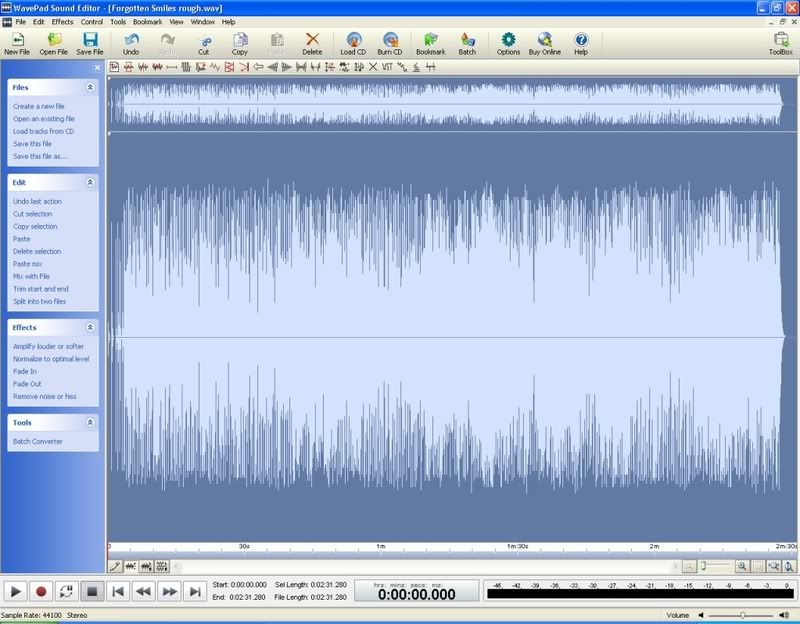 I have it in my audio editor WAVE PAD where I trim it and normalize it. What you see there is the result of the export from Sonar before I normalize it. There is headroom there that normalizing will fill. In Sonar I use Ozone to polish the mix and add some light compression to knock down and tame the bigger spikes. Generally, at the end of this process, most of the songs are all at the same general level and nearly equal to radio ready levels. Attaining a consistent level takes some time and practice but is not that hard to achieve.
You can find my music at: www.herbhartley.comAdd nothing that adds nothing to the music. You can make excuses or you can make progress but not both. The magic you are looking for is in the work you are avoiding.
|
|
|
|
|
|
|
|
|
|
|
|
|
RealBand
|
Joined: Aug 2011
Posts: 289
Apprentice
|
|
OP
Apprentice
Joined: Aug 2011
Posts: 289 |
Thanks Rharv and Hacker for those great posts.
Cheers.
Mike.
|
|
|
|
|
|
|
|
|
|
|
|
Ask sales and support questions about Band-in-a-Box using natural language.
ChatPG's knowledge base includes the full Band-in-a-Box User Manual and sales information from the website.
|
|
|
|
|
|
|
|
|
|
|
Last Chance! The Band-in-a-Box® 2026 for Mac® Special Ends Today (May 31, 2026) at 11:59pm PDT!
Time really is running out! Save up to 50% on Band-in-a-Box® 2026 for Mac® upgrades and receive a FREE Bonus PAK—only when you order by 11:59 PM PDT today!
We've added many major new features and new content in a redesigned Band-in-a-Box® 2026 for Mac®!
Version 2026 introduces a modernized GUI redesign across the program, with updated toolbars, refreshed windows, smoother workflows, and a new Dark Mode option. There’s also a new side toolbar for quicker access to commonly used windows, and the new Multi-View feature lets you arrange multiple windows as layered panels without overlap, making it easier to customize your workspace.
Another exciting new addition is the amazing new AI-Notes feature, which can transcribe polyphonic audio into MIDI. View the results in notation or play them back as MIDI, and choose whether to transcribe an entire track or transcribe specific parts like drums, bass, guitars/piano, or vocals. There's over 100 new features in Band-in-a-Box® 2026 for Mac®.
There's an amazing collection of new content too, including 202 RealTracks, new RealStyles, MIDI SuperTracks, Instrumental Studies, “Songs with Vocals” Artist Performance Sets, Playable RealTracks Set 5, two RealDrums Stems sets, and much more!
Upgrade your Band-in-a-Box for Mac® to save up to 50% on most Band-in-a-Box® 2026 upgrade packages!
Plus, when you order your Band-in-a-Box® 2026 Mac upgrade during our special, you'll receive a Free Bonus PAK of exciting new add-ons.
If you need any help deciding which package is the best option for you, just let us know. We are here to help!
Band-in-a-Box® 2026 Mac Special Offers Extended Until May 31st!
Good news- we've extended our Band-in-a-Box® 2026 for Mac® special offers until May 31, 2026!
Band-in-a-Box® 2026 is packed with major new features, enhancements, and an incredible lineup of new content! The program now sports a sleek, modern GUI redesign across the entire interface, including updated toolbars, refreshed windows, smoother workflows, a new dark mode option, and more. The brand-new side toolbar provides quicker access to key windows, while the new Multi-View feature lets you arrange multiple windows as layered panels without overlap, creating a flexible, clutter-free workspace. We have an amazing new “AI-Notes” feature. This transcribes polyphonic audio into MIDI so you can view it in notation or play it back as MIDI. You can transcribe an entire track (all pitched instruments and drums) or focus on individual parts like drums, bass, guitars/piano, or vocals. There's an amazing collection of new content too, including 202 RealTracks, new RealStyles, MIDI SuperTracks, Instrumental Studies, “Songs with Vocals” Artist Performance Sets, Playable RealTracks Set 5, two RealDrums Stems sets, and much more!
There are over 100 new features in Band-in-a-Box® 2026 for Mac®.
When you order purchase Band-in-a-Box® 2026 before 11:59 PM PDT on May 31st, you'll also receive a Free Bonus PAK packed with exciting new add-ons.
Check out the Band-in-a-Box® for Mac packages page to find the best package for you.
Holiday Weekend Hours
It's Victoria Day Long Weekend in Canada. Our Customer Service hours are:
Saturday, May 16: Closed
Sunday, May 17: Closed
Monday, May 18: 8:00am - 4:00pm
Regular hours resume Tuesday, May 19th!
Today's the Last Day of the Band-in-a-Box 2026® for Mac Special!
Order before 11:59pm PDT today (May 15, 2026) to save up to 50% off your Band-in-a-Box® 2026 for Mac® upgrade and receive a FREE Bonus PAK loaded with great new Add-ons to use with this new version!
Don't wait - order today!
Check out all the new features in the redesigned Band-in-a-Box® 2026 for Mac®!
Band-in-a-Box® 2026 for Mac - Special Offers End at 11:59pm PDT on Friday, May 15th, 2026!
Order before 11:59pm PDT on Friday, May 15th and SAVE up to 50% on most Band-in-a-Box® version 2026 for Mac Upgrade packages... and that's not all! With your version 2026 for Mac purchase, we'll include a Bonus PAK full of great new Add-ons FREE! Upgrade to the 2026 49-PAK to receive even more NEW Add-ons including 20 additional RealTracks... that's 222 NEW RealTracks available with version Band-in-a-Box® 2026 for Mac!
Upgrade to Band-in-a-Box® 2026 for Mac® today for as little as $49! Check out the Band-in-a-Box® packages page for all available purchase options.
Learn more about the Free Bonus PAK and 49-PAK here.
If you have any questions about which package is the best option for you, just let us know. We're here to help!
202 New RealTracks Released with Band-in-a-Box 2026!
With Band-in-a-Box® 2026, we've released 202 incredible new RealTracks (in sets 468-488) in a variety of genres—featuring your most requested styles!
Jazz, Funk & World (Sets 468-475):
Our new jazz, funk & blues RealTracks include a groovin’ collection of RealTracks and RealDrums! These include more requested “soul jazz” RealTracks featuring artists Neil Swainson (bass), Charles Treadway (organ), Brent Mason (guitar), and Wes Little (drums). There are new “smooth jazz” styles (4), which include a RealTracks first: muted trumpet, as well as slick new smooth jazz brushes options for drums. Blues lovers will be thrilled—there are more “classic acoustic blues” styles, including guitar (5), bass (4), and drums (10) with blues master Colin Linden, featuring understated and tasty background acoustic soloing, plus brushes drums and acoustic bass. There are also new electric blues RealTracks, including electric blues with PG favorite Johnny Hiland (3) and soulful electric slide guitar from Colin Linden (4). If you love funk & gospel, there are great new options this year, including gospel organ (3) from Charles Treadway, as well as new funk, tango, and rock ’n’ roll drums (3) and bass (1). And for big, bold arrangements, we have uptempo soul horns (4) featuring a three-part hip horn section with options for a full mix or stems of each individual horn — plus an accompanying rhythm section (4) of drums, bass, guitar, and electric piano!
Rock & Pop (Sets 476–482):
Our new rock & pop RealTracks bring a powerful mix of requested favorites, fresh genres, and modern chart-inspired styles! We have more of our popular “Producer Layered Acoustic Guitars (15)” featuring Band-in-a-Box favorite Brent Mason. We’ve continued our much-requested disco styles (10), and added new Celtic guitar (5) with a more basic, accessible approach than our previous Drop-D or DADGAD offerings. There are also highly requested yacht rock styles (17), inspired by the smooth, polished soft-rock sound of the late ’70s and early ’80s — laid-back grooves, silky electric pianos, warm textures, elegant harmonic movement, and pristine production aesthetics. Fans of heavier styles will love our new glam metal (13), capturing the flashy, high-energy sound of ’80s arena-ready guitar rock. We also have a set of rootsy modern-folk rock (18), with a warm, organic sound combining contemporary folk textures and driving acoustic strumming. And we’ve added lots of new modern pop styles (16) — the kinds of sounds you’re hearing on the radio today, featuring exciting new drums, synths, and cutting-edge RealTracks arrangements.
Country, & Americana (Sets 483–488):
Our new country & Americana RealTracks deliver a rich collection of acoustic, electric, and roots-inspired styles! We have new country pop (9) with legendary guitarist Brent Mason. There is also a potpourri (14) of bouzouki, guitars, banjo, and more, perfect for adding texture and character to contemporary acoustic arrangements. We’ve added funky country guitar (5) with PG favorite Brent Mason, along with classic pedal steel styles (5) featuring steel great Doug Jernigan. There are more country songwriter styles (8) that provide intimate, rootsy foundations for storytelling and modern Americana writing. Finally, we have “background soloing” acoustic guitar (12) with Brent Mason — simpler, but still very tasty acoustic lines designed to sit beautifully behind vocals or act as a subtle standalone solo part.
Check out all the 202 new RealTracks (in sets 468-488)!
And, if you are looking for more, the 2026 49-PAK (for $49) includes an impressive collection of 20 bonus RealTracks, featuring exciting and inspiring additions to add to your RealTracks library. You'll get new country-rhythm guitar styles from PG Music favorites Johnny Hiland and Brent Mason, along with modern-pop grooves that capture today’s radio-ready sound! There are also new indie-folk styles with guitar, bass, 6-string bass used as a high-chording instrument, acoustic guitar, and banjo. Plus, dedicated "cymbal fills" RealDrums provide an added layer that work very well with low-key folky styles with other percussion.
The 2026 49-PAK is loaded with other great new add-ons as well. Learn more about the 2026 49-PAK!
2026 Free Bonus PAK & 49-PAK for Band-in-a-Box® 2026 for Mac®!
With your version 2026 for Mac Pro, MegaPAK, UltraPAK, UltraPAK+, Audiophile Edition or PlusPAK purchase, we'll include a Bonus PAK full of great new Add-ons for FREE! Or upgrade to the 2026 49-PAK for only $49 to receive even more NEW Add-ons including 20 additional RealTracks!
These PAKs are loaded with additional add-ons to supercharge your Band-in-a-Box®!
This Free Bonus PAK includes:
- The 2026 RealCombos Booster PAK:
-For Pro customers, this includes 27 new RealTracks and 23 new RealStyles.
-For MegaPAK customers, this includes 25 new RealTracks and 23 new RealStyles.
-For UltraPAK customers, this includes 12 new RealStyles.
- MIDI Styles Set 92: Look Ma! More MIDI 15: Latin Jazz
- MIDI SuperTracks Set 46: Piano & Organ
- Instrumental Studies Set 24: Groovin' Blues Soloing
- Artist Performance Set 19: Songs with Vocals 9
- Playable RealTracks Set 5
- RealDrums Stems Set 9: Cool Brushes
- SynthMaster Sounds Set 1 (with audio demos)
- iOS Android Band-in-a-Box® App
Looking for more great add-ons, then upgrade to the 2026 49-PAK for just $49 and you'll get:
- 20 Bonus Unreleased RealTracks and RealDrums with 20 RealStyle.
- FLAC Files (lossless audio files) for the 20 Bonus Unreleased RealTracks and RealDrums
- MIDI Styles Set 93: Look Ma! More MIDI 16: SynthMaster
- MIDI SuperTracks Set 47: More SynthMaster
- Instrumental Studies 25 - Soul Jazz Guitar Soloing
- Artist Performance Set 20: Songs with Vocals 10
- RealDrums Stems Set 10: Groovin' Sticks
- SynthMaster Sounds & Styles Set 2 (sounds & styles with audio demos)
Learn more about the Bonus PAK and 49-PAK for Band-in-a-Box® 2026 for Mac®!
|
|
|
|
|
|
|
|
|
|
|
|
Forums57
Topics86,516
Posts806,002
Members40,142
| |
Most Online64,515
Apr 8th, 2026
|
|
|
|
|
|
|
|
|







 Dansk
Dansk Deutsch - Windows
 Español
 Français - Windows
 Italiano - Windows
 Nederlands
 Polski
 Português
 Svenskt
 русский
 Japanese
 Simplified Chinese
 Traditional Chinese
 Korean