I've never practiced enough to have my accompaniment to my favorite cover songs come out fluently.
And I think having to look at chord charts during a performance takes a bit away from the performance.
For those of you that feel the same, and have mastered the accompaniment to a large number of cover songs....how do you go about it ? How do you - practice and memorize them, - review them, - how many times do you think you have to play/practice them before they are forever sealed in your memory for the future ? - if you have to memorize the words too - how do you go about that ? - how often do you have to review ? e.g. until they are forever in your brain ?
Do you think some techniques work far better than others, and you could contrast them and share why ?
With well over 550 songs in our book, it's difficult to memorize them all. Especially since some of the songs are not pulled out often.
But most of them are memorized anyway, and to tell you the truth, I don't know how I do it.
The chords come quite easy to me, it's the words that I find hardest to memorize.
I keep cheat sheets up (on computer) and glance at it, mostly for the first word in a line or section. I've already practiced enough to not need to read it. Then little by little the need to glance gets less and less.
Now if we pull out a song we haven't played in a few months, there will be more glances, but still much more eye contact with the audience than the screen.
10 hours for 1 hours on stage - not bad...but for how many days or months before !!!
Eddie - for having played so long, I imagine you can take a new tune you've heard but never practiced, and get it into your long term memory far quicker than a beginner could (assuming no techical barriers for a beginner).
I have some songs I've practice so frequently, my fingers go where they need to without thinking - even of the names of the chords.
But everything I'm doing recently, I'm still having to look at the key name and review the progression numbers before I play it....I suppose what I really need to do is practice a group of songs - 2 or 3 not to get board, until my fingers go to the right places without thinking, before I move onto the next 2 or 3 songs....I think that's next for me.
Joe, after you play those songs long enough, depending on how well you retain things (and that is VERY different for everybody) you will know them soon enough. Unlike Notes huge catalog, which they need because of the varied places they played, I was always in bands that had maybe 60 active songs at a time. And when we learned a new one, an old one went out. 3 sets, 13 songs each. Those sets would have a solid 10 that were there every night, and 3 variables we plugged in. We ran things different than a lot of bands. If we had a gig Thursday night, we had our sets on Wednesday so if there was a guitar change needed or a sample I had to load from a disc, I could make a note on the set that the change was coming. Very little down time between songs. In fact the 2nd set was 60 minutes that did not stop. But again, different situations.
A song you play once a year is different from a song you play 5 nights a week.
My problem was how to forget them. We played nearly the same set lists for way, way too long.
Our albums and singles are on Spotify, Apple Music, Amazon Music, YouTube Music, Pandora and more. If interested search on Janice Merritt. Thanks! A few of our videos are here on our website: https://www.janiceandbud.com/our-music.html
I would learn the first one to where I was comfortable with the song and could play through with very little distraction of thinking "what's next". Then learn the next one the same way. Then go back to the first and improve it, move on to the second and improve it, then add the third.
Pretty soon you'll find yourself just playing through the first one to get to the next and next .. so you can focus on a new one again (psychological side of it). Plus the discipline of going back reinforces muscle memory.
Not long after you get to knowing 3 or 4 you'll know 10 .. improvement comes with practice on this task just like others; you'll start to get faster at it the more you do it. Don't just try to learn one, then the next, then the next, remember to go back go back and re-remember the ones you did previously. It'll only take a few minutes and keeps them fresh in the mind ..I think of it like a computer uses cache <grin>; it's worth storing special if you are going to need it often. This exercise helps your mind keep it in the 'recently needed' area and fresher in memory for faster recall.
I do not work here, but the benefits are still awesome Make your sound your own!
Now I find the hardest thing is to remember the names of the songs. Once I remember the name, I have a shot at the chords and lyrics. Invariably I get them back to front or forget a verse etc. So many songs are turnarounds, 2, 5, 1, 3 chords or blues.... which helps (sometimes). Why is it just as hard to remember your own songs and lyrics? Using backing tracks on auto play helps....
Windows 10 Home 20H2 Build 19042.487 BIAB 2021 (Build 818) Intel(R) Core(TM), i3-4160, CPU @3.60 GHz RAM 16 GB, 64 Bit X64-based processor Zoom UAC-2 (USB 3 interface-built in midi) VoiceLive 3 Extreme, Sputnik Valve Condenser Mic
A capo?? No capo's on a piano and there shouldn't be one on a guitar either.
It's already been touched on but I'll refine it a bit.
Take say 5 songs to start and do them all every day, 7 days a week. Put pressure on yourself as if you're at a gig. If you mess up you don't get to stop and get a do over. No, you're performing and you'll just have to fake it. A few days, maybe a week of that and you'll have those 5 tunes down. Do another 5 but perform them with the first 5 so you're "playing a gig" with 10 songs, then another 5 and another 5 etc. Remember, this is like a live final rehearsal, no do overs, mess up and you just fake it and move on.
Can't see yourself doing that because you have a life outside of memorizing songs?
Bob, I have to call baloney on saying no capos on guitars. Many reasons, but primarily the one that might resonate best with you is that saying guitarists should not use capos is like saying you have to play a song with odd sounding voicing and inversions on a keyboard because you are only allowed to play in a certain range of notes on the keyboard. Capos allow the right chord voicing to be played to get the arrangement of notes to ring correctly.
The number of songs played with capos and alternate tunings they sound just the way they do is too long to list.
I will name one very well known example: Jumpin Jack Flash as played by Keith Richards. It just doesn’t sound right unless the guitar is tuned to an open tuning AND capoed.
Can't see yourself doing that because you have a life outside of memorizing songs?
What was your question again?
Bob
Very well put Bob (... which is actually typical for you. I have come to appreciate your wry humor and straight talk)
The answer to the OP's question is obvious; practice, practice, practice. How long it takes depends on how much talent you have talent and how much time you got.
There was a time when I would ask myself, why can't I perform at a "near" professional level. I stopped asking that question long ago and I came to peace with reality. First, despite having a love for music creation, I was not blessed with the natural talent to satisfy that love. And second, almost as important, my life decisions took me down a different path long before my music came along.
Can't see yourself doing that because you have a life outside of memorizing songs?
What was your question again?
Bob
Very well put Bob (... which is actually typical for you. I have come to appreciate your wry humor and straight talk)
The answer to the OP's question is obvious; practice, practice, practice. How long it takes depends on how much talent you have talent and how much time you got.
There was a time when I would ask myself, why can't I perform at a "near" professional level. I stopped asking that question long ago and I came to peace with reality. First, despite having a love for music creation, I was not blessed with the natural talent to satisfy that love. And second, almost as important, my life decisions took me down a different path long before my music came along.
Windows 10 (64bit) M-Audio Fast Track Pro, Band in a Box 2025, Cubase 14, Cakewalk and far too many VST plugins that I probably don't need or will ever use
Can't see yourself doing that because you have a life outside of memorizing songs?
What was your question again?
Bob
Very well put Bob (... which is actually typical for you. I have come to appreciate your wry humor and straight talk)
The answer to the OP's question is obvious; practice, practice, practice. How long it takes depends on how much talent you have talent and how much time you got.
There was a time when I would ask myself, why can't I perform at a "near" professional level. I stopped asking that question long ago and I came to peace with reality. First, despite having a love for music creation, I was not blessed with the natural talent to satisfy that love. And second, almost as important, my life decisions took me down a different path long before my music came along.
Practice, practice, practice. I can't formally play any instrument or read a lick of sheet music, so I find it to be an amazing skill to watch. Above Eddie said 10 hours of practice for every 1 hour on stage, and that basically hits the nail on the head. My dad was a professional performer, and he'd rehearse hours every day for 2 weeks straight before doing a show that lasted an hour and a half.
<...snip...>I was always in bands that had maybe 60 active songs at a time. And when we learned a new one, an old one went out.<...>
Been there, done that. In a Top40 cover band, the song of the week had to be learned, and last month's song was too old to play anymore.
It was good training, and learning to cover many different bands styles was good education.
I find if I can remember the first note or chord or word of the song, the rest comes around.
Capo?
Not for me.
Why?
Putting the capo on makes the guitar sharp by pushing the string between two frets. Then when you put your finger down between another two frets, that string goes even sharper.
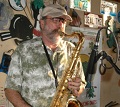
The saxophone is not in tune with itself. Each note is different. For decades I listen to the sax tone, and adjust the vertical position of my lower lip to make the note in tune (or intentionally out of tune). Put the capo on and a finger on and the note is sharp enough to bug me. I want to adjust it.
Of course, for the general public it's probably OK, so if someone else wants to use one, it's their business.
Putting the capo on makes the guitar sharp by pushing the string between two frets. Then when you put your finger down between another two frets, that string goes even sharper.
I use a capo sometimes for recording, and as rockstar_not pointed out it has nothing to do with not being able to play the chords, it has to do with getting the open voicing which for some material is very important.
Pitch is not an issue, I just tune the guitar slightly flat so that when I put the capo on it is in perfect tune.
zplane recently interviewed Peter Gannon, the founder and creator of Band-in-a-Box, about the software's early days, what sets it apart from AI, how zplane's audio algorithms are used in Band-in-a-Box, and more!
Special thanks to the team at zplane for their continued support.
Last Chance! The Band-in-a-Box® 2026 for Mac® Special Ends Today (May 31, 2026) at 11:59pm PDT!
Time really is running out! Save up to 50% on Band-in-a-Box® 2026 for Mac® upgrades and receive a FREE Bonus PAK—only when you order by 11:59 PM PDT today!
We've added many major new features and new content in a redesigned Band-in-a-Box® 2026 for Mac®!
Version 2026 introduces a modernized GUI redesign across the program, with updated toolbars, refreshed windows, smoother workflows, and a new Dark Mode option. There’s also a new side toolbar for quicker access to commonly used windows, and the new Multi-View feature lets you arrange multiple windows as layered panels without overlap, making it easier to customize your workspace.
Another exciting new addition is the amazing new AI-Notes feature, which can transcribe polyphonic audio into MIDI. View the results in notation or play them back as MIDI, and choose whether to transcribe an entire track or transcribe specific parts like drums, bass, guitars/piano, or vocals. There's over 100 new features in Band-in-a-Box® 2026 for Mac®.
There's an amazing collection of new content too, including 202 RealTracks, new RealStyles, MIDI SuperTracks, Instrumental Studies, “Songs with Vocals” Artist Performance Sets, Playable RealTracks Set 5, two RealDrums Stems sets, and much more!
Upgrade your Band-in-a-Box for Mac® to save up to 50% on most Band-in-a-Box® 2026 upgrade packages!
Plus, when you order your Band-in-a-Box® 2026 Mac upgrade during our special, you'll receive a Free Bonus PAK of exciting new add-ons.
If you need any help deciding which package is the best option for you, just let us know. We are here to help!
Band-in-a-Box® 2026 Mac Special Offers Extended Until May 31st!
Good news- we've extended our Band-in-a-Box® 2026 for Mac® special offers until May 31, 2026!
Band-in-a-Box® 2026 is packed with major new features, enhancements, and an incredible lineup of new content! The program now sports a sleek, modern GUI redesign across the entire interface, including updated toolbars, refreshed windows, smoother workflows, a new dark mode option, and more. The brand-new side toolbar provides quicker access to key windows, while the new Multi-View feature lets you arrange multiple windows as layered panels without overlap, creating a flexible, clutter-free workspace. We have an amazing new “AI-Notes” feature. This transcribes polyphonic audio into MIDI so you can view it in notation or play it back as MIDI. You can transcribe an entire track (all pitched instruments and drums) or focus on individual parts like drums, bass, guitars/piano, or vocals. There's an amazing collection of new content too, including 202 RealTracks, new RealStyles, MIDI SuperTracks, Instrumental Studies, “Songs with Vocals” Artist Performance Sets, Playable RealTracks Set 5, two RealDrums Stems sets, and much more!
There are over 100 new features in Band-in-a-Box® 2026 for Mac®.
When you order purchase Band-in-a-Box® 2026 before 11:59 PM PDT on May 31st, you'll also receive a Free Bonus PAK packed with exciting new add-ons.
Check out the Band-in-a-Box® for Mac packages page to find the best package for you.
Today's the Last Day of the Band-in-a-Box 2026® for Mac Special!
Order before 11:59pm PDT today (May 15, 2026) to save up to 50% off your Band-in-a-Box® 2026 for Mac® upgrade and receive a FREE Bonus PAK loaded with great new Add-ons to use with this new version!
Band-in-a-Box® 2026 for Mac - Special Offers End at 11:59pm PDT on Friday, May 15th, 2026!
Order before 11:59pm PDT on Friday, May 15th and SAVE up to 50% on most Band-in-a-Box® version 2026 for Mac Upgrade packages... and that's not all! With your version 2026 for Mac purchase, we'll include a Bonus PAK full of great new Add-ons FREE! Upgrade to the 2026 49-PAK to receive even more NEW Add-ons including 20 additional RealTracks... that's 222 NEW RealTracks available with version Band-in-a-Box® 2026 for Mac!
Upgrade to Band-in-a-Box® 2026 for Mac® today for as little as $49! Check out the Band-in-a-Box® packages page for all available purchase options.
Learn more about the Free Bonus PAK and 49-PAK here.
If you have any questions about which package is the best option for you, just let us know. We're here to help!
202 New RealTracks Released with Band-in-a-Box 2026!
With Band-in-a-Box® 2026, we've released 202 incredible new RealTracks (in sets 468-488) in a variety of genres—featuring your most requested styles!
Jazz, Funk & World (Sets 468-475):
Our new jazz, funk & blues RealTracks include a groovin’ collection of RealTracks and RealDrums! These include more requested “soul jazz” RealTracks featuring artists Neil Swainson (bass), Charles Treadway (organ), Brent Mason (guitar), and Wes Little (drums). There are new “smooth jazz” styles (4), which include a RealTracks first: muted trumpet, as well as slick new smooth jazz brushes options for drums. Blues lovers will be thrilled—there are more “classic acoustic blues” styles, including guitar (5), bass (4), and drums (10) with blues master Colin Linden, featuring understated and tasty background acoustic soloing, plus brushes drums and acoustic bass. There are also new electric blues RealTracks, including electric blues with PG favorite Johnny Hiland (3) and soulful electric slide guitar from Colin Linden (4). If you love funk & gospel, there are great new options this year, including gospel organ (3) from Charles Treadway, as well as new funk, tango, and rock ’n’ roll drums (3) and bass (1). And for big, bold arrangements, we have uptempo soul horns (4) featuring a three-part hip horn section with options for a full mix or stems of each individual horn — plus an accompanying rhythm section (4) of drums, bass, guitar, and electric piano!
Rock & Pop (Sets 476–482):
Our new rock & pop RealTracks bring a powerful mix of requested favorites, fresh genres, and modern chart-inspired styles! We have more of our popular “Producer Layered Acoustic Guitars (15)” featuring Band-in-a-Box favorite Brent Mason. We’ve continued our much-requested disco styles (10), and added new Celtic guitar (5) with a more basic, accessible approach than our previous Drop-D or DADGAD offerings. There are also highly requested yacht rock styles (17), inspired by the smooth, polished soft-rock sound of the late ’70s and early ’80s — laid-back grooves, silky electric pianos, warm textures, elegant harmonic movement, and pristine production aesthetics. Fans of heavier styles will love our new glam metal (13), capturing the flashy, high-energy sound of ’80s arena-ready guitar rock. We also have a set of rootsy modern-folk rock (18), with a warm, organic sound combining contemporary folk textures and driving acoustic strumming. And we’ve added lots of new modern pop styles (16) — the kinds of sounds you’re hearing on the radio today, featuring exciting new drums, synths, and cutting-edge RealTracks arrangements.
Country, & Americana (Sets 483–488):
Our new country & Americana RealTracks deliver a rich collection of acoustic, electric, and roots-inspired styles! We have new country pop (9) with legendary guitarist Brent Mason. There is also a potpourri (14) of bouzouki, guitars, banjo, and more, perfect for adding texture and character to contemporary acoustic arrangements. We’ve added funky country guitar (5) with PG favorite Brent Mason, along with classic pedal steel styles (5) featuring steel great Doug Jernigan. There are more country songwriter styles (8) that provide intimate, rootsy foundations for storytelling and modern Americana writing. Finally, we have “background soloing” acoustic guitar (12) with Brent Mason — simpler, but still very tasty acoustic lines designed to sit beautifully behind vocals or act as a subtle standalone solo part.
And, if you are looking for more, the 2026 49-PAK (for $49) includes an impressive collection of 20 bonus RealTracks, featuring exciting and inspiring additions to add to your RealTracks library. You'll get new country-rhythm guitar styles from PG Music favorites Johnny Hiland and Brent Mason, along with modern-pop grooves that capture today’s radio-ready sound! There are also new indie-folk styles with guitar, bass, 6-string bass used as a high-chording instrument, acoustic guitar, and banjo. Plus, dedicated "cymbal fills" RealDrums provide an added layer that work very well with low-key folky styles with other percussion.
The 2026 49-PAK is loaded with other great new add-ons as well. Learn more about the 2026 49-PAK!
One of our representatives will be happy to help you over the phone. Our hours of operation are from
6:00AM to 6:00PM PST (GMT -8) Monday thru Friday, and 8:00AM to 4:00PM PST Saturday. We are closed Sunday. You can also send us your questions via email.
One of our representatives will be happy to help you on our Live Chat or by email. Our hours of operation are from
6:00AM to 6:00PM PST (GMT -8) Monday thru Friday; 8:00AM to 4:00PM PST (GMT -8) Saturday; Closed Sunday.



 Norton Music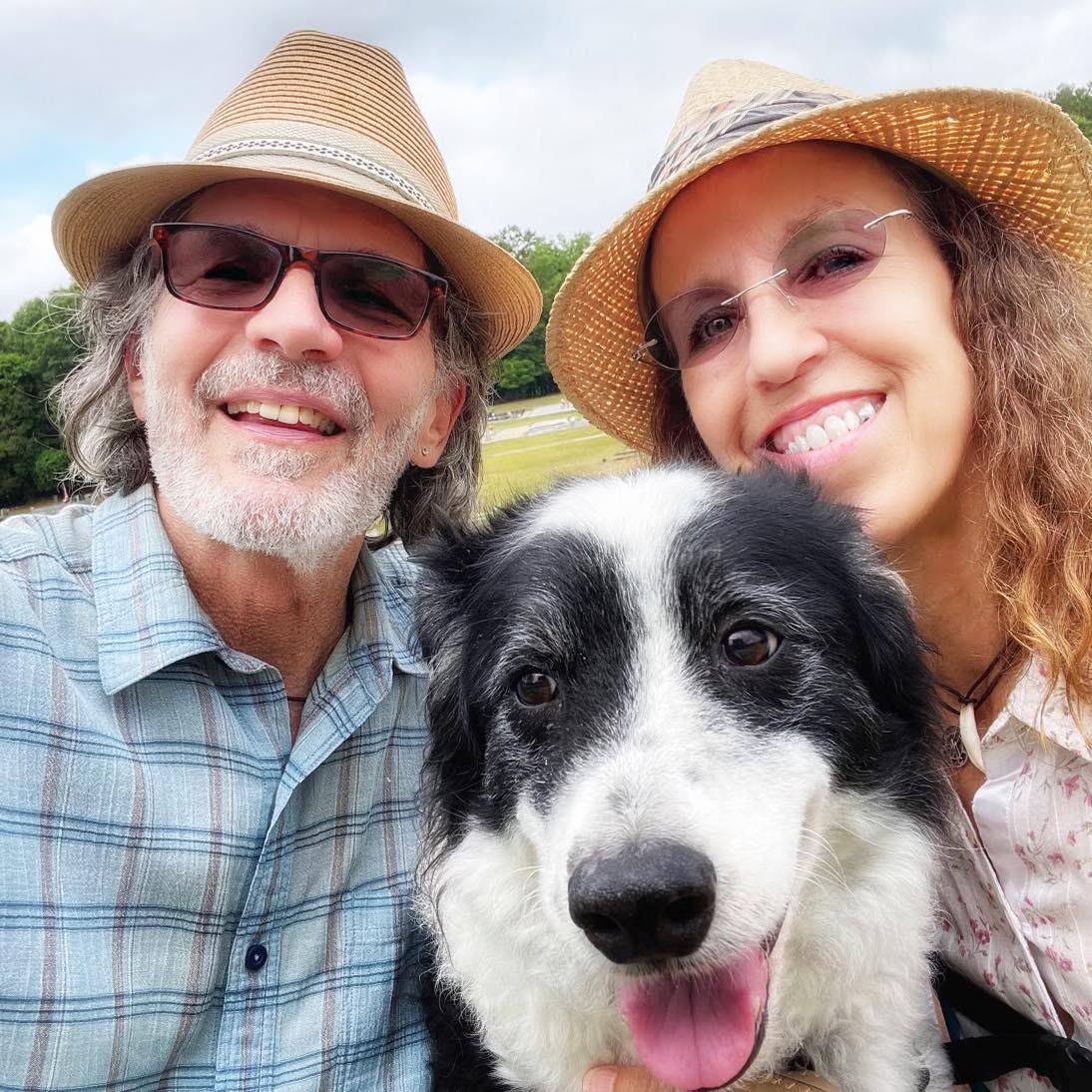




 Dansk
Dansk Deutsch - Windows
 Español
 Français - Windows
 Italiano - Windows
 Nederlands
 Polski
 Português
 Svenskt
 русский
 Japanese
 Simplified Chinese
 Traditional Chinese
 Korean