This topic is partly about learning to play, but maybe more about writing, so posting it here. It's about writing interesting solos (and riffs). Those may be two different things, so I can split this topic up if needed.
So here's the deal - I'm trying to write better solos and also add more interesting and complex riffs to my songs. My method is normally to use a MIDI keyboard and play the midi through into BIAB after choosing the style, realtracks and chord progression. I can play notes that fit with the chords, but it's just a bit slow and often boring, and I find myself often "stuck" using the same pattern and often playing more of a melody that follows the chords than a solo, which sort of complements them.
In an effort to find examples of solos I tried the Soloist feature in BIAB to see what would fit with my song, and some customized BIAB imported songs for comparison. It was somewhat helpful to get a sense of the scale notes and the timings that would fit and definitely had a lot more action than my own solos - and sometimes too much! I was wondering if anyone else has tried the Soloist feature or anything similar in BIAB to do the same sort of thing.
I know that a lot of people learn by emulating great performers and practicing their styles and their performances on songs, but I'm not at that skill level yet - for example emulating Albert Collins on guitar - but I'm trying.
So I'd really like to hear what worked for people here which enabled you to create solos in your own songs - I've heard some really great solo work here in the User Showcase forum.
If you need more specifics let me know.
Last edited by EdZ314; 06/01/2006:37 PM.
Ed Z
Soundcloud profile https://soundcloud.com/user-415064494 BIAB user since 2019 iPad Mini, Garageband for iOS, BIAB for Windows 2020 UltraPAK, Xtra Styles packs 6-9, Windows 10 Lenovo PC, Kontakt Player, SpitFire LABS, SampleTank 4 CS, some Soundfonts
For me - having an instructor cover scales and music theory extensively. For example, I have one scale that covers the full guitar neck. We have been covering that scale for about 4 months now. Variations, etc.
It is amazing how much that detail has helped my playing and improvisation.
I was outside with my guitar last evening. A kid came by and he asked me what I was playing. I responded with "to be honest, it isn't a song. I was just playing." He said that was really good.
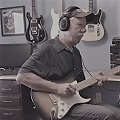
I played in a cover band for many years and got really good at figuring out guitar solos by ear (wasn't any internet or tab back then) but when it came to improvising a solo I would end up playing the same basic licks over and over again.
What worked for me is I taped a backing track of rhythm guitar, a I-IV-V 12 bar blues for example, maybe 10 minutes long or so (no BIAB back then either ) then I would take a lick from a solo I really liked and just play that lick over those changes, seeing how it worked over each chord change, and if it didn't, what notes I needed to change to make it work over each chord change. Then start changing some of the notes, adding lead in notes, etc. Pretty soon you have developed some licks that work over all the chord changes. Then find another lick you like and repeat the process. Then combine the two licks, etc. etc.
You must be into blues if you like Albert Collins.
I would recommend Albert King as a good guy to study initially. He had a very simple, but very effective style. Learn some of his licks and see how you can apply them over different chord changes, and what you might need to modify to make them work. With BIAB as you know it's very easy to setup a great sounding backup track to play over.
A guitarist I worked with for a period several years ago told me after years of playing, they downloaded (I believe it was) Audacity, and figured out how to make it record "what they hear" on their computer, and then used it to isolate a solo they wanted to learn.
We used to have little jam sessions and record them with this same method.
He would adjust a selection until it loops perfectly through the first part of the solo, and save it to a new track. Then the next solo section, and so on, until they had a track for each section.
Then they'd spend time on each section, letting it loop over and over, until they got it.
I haven't spoken to this person in a long time now - we used to have a lot of fun, he's moved on to be a studio musician for decently big acts, and he's based out of Toronto now. I've heard they're doing very well for themselves.
They change every month. They offer a lot of $5 downloads. So it is east to try a few and see if you like how they are presented (and if you learn anything).
You must be into blues if you like Albert Collins.
I would recommend Albert King as a good guy to study initially. He had a very simple, but very effective style. Learn some of his licks and see how you can apply them over different chord changes, and what you might need to modify to make them work. With BIAB as you know it's very easy to setup a great sounding backup track to play over.
Most of all, have fun with it!
A great blues player! You might want listen and not watch Albert King as he is left handed and although he plays a lefty guitar it is strung upside down...a righty could play it but the knobs would be on the top. So he is strumming up and playing chords completely differently finger wise. So many, many people think Hendrix played like this but he played a right handed guitar strung for a lefty...so his finger positions, etc., are the same as a righty.
Pardon the digression...I am an old lefty!
Bud
Our albums and singles are on Spotify, Apple Music, Amazon Music, YouTube Music, Pandora and more. If interested search on Janice Merritt. Thanks! Our Videos
Wow - thanks Deb, Mario, Dave, Deryk, Floyd, Bud - I feel like I hit the jackpot. These are some great recommendations that will keep me busy for quite some time! I will definitely check out Otis Rush, Eric Gales, and Albert King. I am a big blues fan, but I also enjoy jazz, country, and so forth.
I have to add that I've learned a tremendous amount about music and how it works in the couple years since I got BIAB and discovered these forums, and the level of knowledge and talent here is very impressive.
Going to check into some of these tonight first thing after work
Last edited by EdZ314; 06/02/2011:51 AM. Reason: Fixed several typos
Ed Z
Soundcloud profile https://soundcloud.com/user-415064494 BIAB user since 2019 iPad Mini, Garageband for iOS, BIAB for Windows 2020 UltraPAK, Xtra Styles packs 6-9, Windows 10 Lenovo PC, Kontakt Player, SpitFire LABS, SampleTank 4 CS, some Soundfonts
Make sure to watch Rick Beato’s channel on YouTube, particularly the ‘what makes this song great‘ series In almost every episode he will break down some of the riffs and melodic items that the particular song has at hand.
Yes sir - huge fan of Rick Beato and a Beato Club member The breakdown of Nirvana's Smells Like Teen Spirit was eye opening. I watch the music theory stuff too, and take in what I can.
Ed Z
Soundcloud profile https://soundcloud.com/user-415064494 BIAB user since 2019 iPad Mini, Garageband for iOS, BIAB for Windows 2020 UltraPAK, Xtra Styles packs 6-9, Windows 10 Lenovo PC, Kontakt Player, SpitFire LABS, SampleTank 4 CS, some Soundfonts
Rick Beato is one of my favorite YouTube guys, but his topics can get way over the average guy's head in a hurry in terms of music theory. I know a fair amount of music theory and I've seen a number of his talks just go sailing right over my head, but oh well, to the topic.
I've been playing at being a "lead guitarist" since about 1968, which is roughly when I discovered the blues.
I think that if you want to write good solos, well, you need to be able to play good solos, or at least understand them pretty well. So I'm gonna take you back to my roots with some recommendations. Back before I discovered the blues, I was really into Hendrix and Clapton of the Cream. Those two were my guitar gods and I listened to their music constantly. I got to where I was able to play a number of their licks as well, picking them off of records by ear. Then when I started developing a blues style, I became somewhat more analytical. I spent a HUGE amount of time with the first three John Mayall and the Blues Breakers albums: with Eric Clapton, Peter Green, and Mick Taylor -- in that order. Of the three, I found the first, the one with Clapton, to be the most formative. To me, it sounded as if the licks Clapton was playing were improvisational, whereas by the time Mick Taylor arrived on the scene, it sounded as if they were coming from a canned repertory.
But little did I know . . . it was a few years later when I heard my first Albert King album. Suddenly I'm hearing all these licks that I had heard Clapton play -- difference was King was playing with a more or less clean sound using his thumb, where Clapton was overdriving his Marshalls and playing with a skritchy-sounding pick. Huh, that was a real eye-opener. So, yeah, definitely add Albert King to the list. I also listened to a lot of American blues artists, mostly folks that played electric guitar, like the great BB King and John Lee Hooker. Also the Paul Butterfield Blues Band, although I found them to be a bit too slickly commercial for my tastes.
As time has moved on there have been so many talented players who have made their marks, and I'm sure I don't know the half of them. Folks like Joe Walsh of the Eagles, Eddie Van Halen, Steve Vai (and the whole shred movement), Joe Satriani, George Benson, Lee Ritenour, Larry Carlton, Russ Freeman, Norman Brown and many more. All of these guys are worth spending some time with, analyzing what it is that makes their solos work.
And that's just guitar. When it comes to keyboards, I'm not at all current as to who's hot. I remember listening to a lot of Brian Auger back in the early 70s, who played a Hammond B3, Keith Emmerson, Rick Wakeman of Yes, and Jan Hammer of Miami Vice fame. Of them all, I guess I liked the kind of laid back style of Auger the best, although I was quite impressed with Hammer's ability to emulate guitar. I also enjoy good saxophone solo work. There have been quite a few sax greats, but probably the greatest contemporary sax player -- or at least the most influential -- other than the likes of Dave Koz who does a great job of self-promotion -- is David Sanborn. Man, can that dude play the horn!
Now, if I may discuss for a bit some basics of not just writing solos, but melody in general. General things to keep in mind when you're writing. If writing in a common time signature, like 4-4, try to have your most important notes land on the downbeat. When playing in 16th notes, for example, that means notes 1 and 3 of a quadruplet, with 1 being favored over 3. These "most important" notes are often the highest notes in a scale passage or arpeggio. Don't be afraid to mix things up rhythmically. Some folks can pull off solos of all 16th or 32nd notes, but I don't recommend this. Changes in rhythm add to the element of surprise, which keeps a listener engaged. Also, when planning out the overall structure of the solo, it should have a beginning, middle and end. Just like a good book or short story, it's important for the beginning to have a good "hook," to set the listener's interest. This is built upon, where the middle often employs more exposition, slowly building thematically, possibly by restating or embellishing upon a theme. And the ending needs to have a climax -- some sort of virtuositic flourish that anchors the whole thing. And once this is played, the solo should come to a conclusion shortly after.
Now, if you're playing over a fairly common sort of progression, say a I IV V or a I VI IV V, you can stay pretty much in one key the entire time. Frequently in blues, players will switch back and forth between major and minor, depending on where they are in the progression -- actually usually it's mixolydian and dorian, but major and minor is close enough. But other progressions are not so easy to solo over, and this is where you have to examine the progression more closely, analyzing the chord structures and seeing if you can puzzle out an interesting sounding thread of notes that weave in and around these structures. That can be challenging, but it is usually well worth the time spent, so I strongly recommend you take this approach when writing solos over more complex progressions.
Okay, well I've blathered on long enough. Should give you a thing or two to think about, at any rate.
Rick Beato is one of my favorite YouTube guys, but his topics can get way over the average guy's head in a hurry in terms of music theory. I know a fair amount of music theory and I've seen a number of his talks just go sailing right over my head
^^ This!
Thanks Michel. That's some great info, and really interesting to hear about your specific experiences in learning to play and perform. It really hit home, too because I was just watching a couple videos yesterday where Miles Davis and Herbie Hancock were talking about music. Herbie was a lot more verbose . But anyway, there's a common theme that keeps coming up - listen, listen, listen to the masters, and then practice, practice, practice. I've got a good list of my own favorite masters and now a few new ones. It's great to have some focus because it's not like when I was young and you could go to the record store and select from a few hundred albums - now it's like millions. Then there's the tools and the gear and the products that let you create amazing sounds with a few clicks (including BIAB). Nothing wrong with those tools, but I don't want to get caught up in the glitz and glamor.
Back to the topic at hand, with all of the above that's at least 10 years of work lined up, so yes, that will keep me busy for a while!
Ed Z
Soundcloud profile https://soundcloud.com/user-415064494 BIAB user since 2019 iPad Mini, Garageband for iOS, BIAB for Windows 2020 UltraPAK, Xtra Styles packs 6-9, Windows 10 Lenovo PC, Kontakt Player, SpitFire LABS, SampleTank 4 CS, some Soundfonts
The breakdown of Nirvana's Smells Like Teen Spirit was eye opening. I watch the music theory stuff too, and take in what I can.
That recent episode was amazing. When he played the vocal melody over the chords with a clean guitar sound, was that crazy how beautiful that was or what?
I always marginally liked that album for the Extreme dynamics and Cobain’s on-pitch buzzsaw vocal in the chorus of that song, but really never appreciated the melody amongst the chords like Rick pointed out. Watch the Muse episode for some really cool melody ideas as well and rather obtuse chords. I’m writing a song right now where I’m stealing some of the unexpected chord progressions, and the extended chords from Smells Like Teen Spirit
Last Chance! The Band-in-a-Box® 2026 for Mac® Special Ends Today (May 31, 2026) at 11:59pm PDT!
Time really is running out! Save up to 50% on Band-in-a-Box® 2026 for Mac® upgrades and receive a FREE Bonus PAK—only when you order by 11:59 PM PDT today!
We've added many major new features and new content in a redesigned Band-in-a-Box® 2026 for Mac®!
Version 2026 introduces a modernized GUI redesign across the program, with updated toolbars, refreshed windows, smoother workflows, and a new Dark Mode option. There’s also a new side toolbar for quicker access to commonly used windows, and the new Multi-View feature lets you arrange multiple windows as layered panels without overlap, making it easier to customize your workspace.
Another exciting new addition is the amazing new AI-Notes feature, which can transcribe polyphonic audio into MIDI. View the results in notation or play them back as MIDI, and choose whether to transcribe an entire track or transcribe specific parts like drums, bass, guitars/piano, or vocals. There's over 100 new features in Band-in-a-Box® 2026 for Mac®.
There's an amazing collection of new content too, including 202 RealTracks, new RealStyles, MIDI SuperTracks, Instrumental Studies, “Songs with Vocals” Artist Performance Sets, Playable RealTracks Set 5, two RealDrums Stems sets, and much more!
Upgrade your Band-in-a-Box for Mac® to save up to 50% on most Band-in-a-Box® 2026 upgrade packages!
Plus, when you order your Band-in-a-Box® 2026 Mac upgrade during our special, you'll receive a Free Bonus PAK of exciting new add-ons.
If you need any help deciding which package is the best option for you, just let us know. We are here to help!
Band-in-a-Box® 2026 Mac Special Offers Extended Until May 31st!
Good news- we've extended our Band-in-a-Box® 2026 for Mac® special offers until May 31, 2026!
Band-in-a-Box® 2026 is packed with major new features, enhancements, and an incredible lineup of new content! The program now sports a sleek, modern GUI redesign across the entire interface, including updated toolbars, refreshed windows, smoother workflows, a new dark mode option, and more. The brand-new side toolbar provides quicker access to key windows, while the new Multi-View feature lets you arrange multiple windows as layered panels without overlap, creating a flexible, clutter-free workspace. We have an amazing new “AI-Notes” feature. This transcribes polyphonic audio into MIDI so you can view it in notation or play it back as MIDI. You can transcribe an entire track (all pitched instruments and drums) or focus on individual parts like drums, bass, guitars/piano, or vocals. There's an amazing collection of new content too, including 202 RealTracks, new RealStyles, MIDI SuperTracks, Instrumental Studies, “Songs with Vocals” Artist Performance Sets, Playable RealTracks Set 5, two RealDrums Stems sets, and much more!
There are over 100 new features in Band-in-a-Box® 2026 for Mac®.
When you order purchase Band-in-a-Box® 2026 before 11:59 PM PDT on May 31st, you'll also receive a Free Bonus PAK packed with exciting new add-ons.
Check out the Band-in-a-Box® for Mac packages page to find the best package for you.
Today's the Last Day of the Band-in-a-Box 2026® for Mac Special!
Order before 11:59pm PDT today (May 15, 2026) to save up to 50% off your Band-in-a-Box® 2026 for Mac® upgrade and receive a FREE Bonus PAK loaded with great new Add-ons to use with this new version!
Band-in-a-Box® 2026 for Mac - Special Offers End at 11:59pm PDT on Friday, May 15th, 2026!
Order before 11:59pm PDT on Friday, May 15th and SAVE up to 50% on most Band-in-a-Box® version 2026 for Mac Upgrade packages... and that's not all! With your version 2026 for Mac purchase, we'll include a Bonus PAK full of great new Add-ons FREE! Upgrade to the 2026 49-PAK to receive even more NEW Add-ons including 20 additional RealTracks... that's 222 NEW RealTracks available with version Band-in-a-Box® 2026 for Mac!
Upgrade to Band-in-a-Box® 2026 for Mac® today for as little as $49! Check out the Band-in-a-Box® packages page for all available purchase options.
Learn more about the Free Bonus PAK and 49-PAK here.
If you have any questions about which package is the best option for you, just let us know. We're here to help!
202 New RealTracks Released with Band-in-a-Box 2026!
With Band-in-a-Box® 2026, we've released 202 incredible new RealTracks (in sets 468-488) in a variety of genres—featuring your most requested styles!
Jazz, Funk & World (Sets 468-475):
Our new jazz, funk & blues RealTracks include a groovin’ collection of RealTracks and RealDrums! These include more requested “soul jazz” RealTracks featuring artists Neil Swainson (bass), Charles Treadway (organ), Brent Mason (guitar), and Wes Little (drums). There are new “smooth jazz” styles (4), which include a RealTracks first: muted trumpet, as well as slick new smooth jazz brushes options for drums. Blues lovers will be thrilled—there are more “classic acoustic blues” styles, including guitar (5), bass (4), and drums (10) with blues master Colin Linden, featuring understated and tasty background acoustic soloing, plus brushes drums and acoustic bass. There are also new electric blues RealTracks, including electric blues with PG favorite Johnny Hiland (3) and soulful electric slide guitar from Colin Linden (4). If you love funk & gospel, there are great new options this year, including gospel organ (3) from Charles Treadway, as well as new funk, tango, and rock ’n’ roll drums (3) and bass (1). And for big, bold arrangements, we have uptempo soul horns (4) featuring a three-part hip horn section with options for a full mix or stems of each individual horn — plus an accompanying rhythm section (4) of drums, bass, guitar, and electric piano!
Rock & Pop (Sets 476–482):
Our new rock & pop RealTracks bring a powerful mix of requested favorites, fresh genres, and modern chart-inspired styles! We have more of our popular “Producer Layered Acoustic Guitars (15)” featuring Band-in-a-Box favorite Brent Mason. We’ve continued our much-requested disco styles (10), and added new Celtic guitar (5) with a more basic, accessible approach than our previous Drop-D or DADGAD offerings. There are also highly requested yacht rock styles (17), inspired by the smooth, polished soft-rock sound of the late ’70s and early ’80s — laid-back grooves, silky electric pianos, warm textures, elegant harmonic movement, and pristine production aesthetics. Fans of heavier styles will love our new glam metal (13), capturing the flashy, high-energy sound of ’80s arena-ready guitar rock. We also have a set of rootsy modern-folk rock (18), with a warm, organic sound combining contemporary folk textures and driving acoustic strumming. And we’ve added lots of new modern pop styles (16) — the kinds of sounds you’re hearing on the radio today, featuring exciting new drums, synths, and cutting-edge RealTracks arrangements.
Country, & Americana (Sets 483–488):
Our new country & Americana RealTracks deliver a rich collection of acoustic, electric, and roots-inspired styles! We have new country pop (9) with legendary guitarist Brent Mason. There is also a potpourri (14) of bouzouki, guitars, banjo, and more, perfect for adding texture and character to contemporary acoustic arrangements. We’ve added funky country guitar (5) with PG favorite Brent Mason, along with classic pedal steel styles (5) featuring steel great Doug Jernigan. There are more country songwriter styles (8) that provide intimate, rootsy foundations for storytelling and modern Americana writing. Finally, we have “background soloing” acoustic guitar (12) with Brent Mason — simpler, but still very tasty acoustic lines designed to sit beautifully behind vocals or act as a subtle standalone solo part.
And, if you are looking for more, the 2026 49-PAK (for $49) includes an impressive collection of 20 bonus RealTracks, featuring exciting and inspiring additions to add to your RealTracks library. You'll get new country-rhythm guitar styles from PG Music favorites Johnny Hiland and Brent Mason, along with modern-pop grooves that capture today’s radio-ready sound! There are also new indie-folk styles with guitar, bass, 6-string bass used as a high-chording instrument, acoustic guitar, and banjo. Plus, dedicated "cymbal fills" RealDrums provide an added layer that work very well with low-key folky styles with other percussion.
The 2026 49-PAK is loaded with other great new add-ons as well. Learn more about the 2026 49-PAK!
2026 Free Bonus PAK & 49-PAK for Band-in-a-Box® 2026 for Mac®!
With your version 2026 for Mac Pro, MegaPAK, UltraPAK, UltraPAK+, Audiophile Edition or PlusPAK purchase, we'll include a Bonus PAK full of great new Add-ons for FREE! Or upgrade to the 2026 49-PAK for only $49 to receive even more NEW Add-ons including 20 additional RealTracks!
These PAKs are loaded with additional add-ons to supercharge your Band-in-a-Box®!
This Free Bonus PAK includes:
The 2026 RealCombos Booster PAK:
-For Pro customers, this includes 27 new RealTracks and 23 new RealStyles.
-For MegaPAK customers, this includes 25 new RealTracks and 23 new RealStyles.
-For UltraPAK customers, this includes 12 new RealStyles.
MIDI Styles Set 92: Look Ma! More MIDI 15: Latin Jazz
MIDI SuperTracks Set 46: Piano & Organ
Instrumental Studies Set 24: Groovin' Blues Soloing
Artist Performance Set 19: Songs with Vocals 9
Playable RealTracks Set 5
RealDrums Stems Set 9: Cool Brushes
SynthMaster Sounds Set 1 (with audio demos)
iOS Android Band-in-a-Box® App
Looking for more great add-ons, then upgrade to the 2026 49-PAK for just $49 and you'll get:
20 Bonus Unreleased RealTracks and RealDrums with 20 RealStyle.
FLAC Files (lossless audio files) for the 20 Bonus Unreleased RealTracks and RealDrums
MIDI Styles Set 93: Look Ma! More MIDI 16: SynthMaster
MIDI SuperTracks Set 47: More SynthMaster
Instrumental Studies 25 - Soul Jazz Guitar Soloing
Artist Performance Set 20: Songs with Vocals 10
RealDrums Stems Set 10: Groovin' Sticks
SynthMaster Sounds & Styles Set 2 (sounds & styles with audio demos)
One of our representatives will be happy to help you over the phone. Our hours of operation are from
6:00AM to 6:00PM PST (GMT -8) Monday thru Friday, and 8:00AM to 4:00PM PST Saturday. We are closed Sunday. You can also send us your questions via email.
One of our representatives will be happy to help you on our Live Chat or by email. Our hours of operation are from
6:00AM to 6:00PM PST (GMT -8) Monday thru Friday; 8:00AM to 4:00PM PST (GMT -8) Saturday; Closed Sunday.




 ) then I would take a lick from a solo I really liked and just play that lick over those changes, seeing how it worked over each chord change, and if it didn't, what notes I needed to change to make it work over each chord change. Then start changing some of the notes, adding lead in notes, etc. Pretty soon you have developed some licks that work over all the chord changes. Then find another lick you like and repeat the process. Then combine the two licks, etc. etc.




 Dansk
Dansk Deutsch - Windows
 Español
 Français - Windows
 Italiano - Windows
 Nederlands
 Polski
 Português
 Svenskt
 русский
 Japanese
 Simplified Chinese
 Traditional Chinese
 Korean