The circle and the chart are helpful. Another important concept is what's called "the scale pattern," or, the "intervals" of the scale. Major, minor, pentatonic -- each octave has a specific pattern of intervals.
A full step interval is two semitones. For example, C to D in the C Maj scale is a full step (two frets.) A half-step interval is one semi-tone, (one fret) e.g. E to F or B to C. There are no E# nor is there a B# in the C Major scale. -------------
Full step: C (the one) up two frets to (the two) D.
-------------------- C Major Scale: ----------------
C (root) - D (full step up) - E (full step from D) - F (half step) -- G (full step) -- A (full step) -- B (full step) - C (half step)
The circle and the chart are helpful. Another important concept is what's called "the scale pattern," or, the "intervals" of the scale. Major, minor, pentatonic -- each octave has a specific pattern of intervals.
A full step interval is two semitones. For example, C to D in the C Maj scale is a full step. A half-step interval is one semi-tone, e.g. E to F or B to C. There are no E# nor is there a B# in the C Major scale. -------------
Full step: C (the one) - C# (the two) - (the three) D.
C (root) - D (full step up) - E (full step from D) - F (half step) -- G (full step) -- A (full step) -- B (full step) - C (half step) --
Apply the same principles to all 12 keys of the major scale.
Thanks Ed, I think I understand full-step/half step and that from C to D we have full(2 frets) and from E to F we have half (1 fret).
Gracie Terzian seems to use "scale" and "key" interchangably. Are they the same? If we look at the table I posted on 7/29 (I'm assuming you didn't detect any errors in it) and look at the scale/key of E Major, we see the following notes.
E-F#-G#-A-B-C#-D# we see it's root is located at clock position 4 on the circle and we have 4 sharps. (I'm thinking these 4's are unrelated since at clock position 11, F we, certainly can't have 11 sharps or 11 flats). If I play these notes on my keyboard and end with the higher octave E , I hear the familiar Do-Re-Mi musical sequence.
I also notice in this table that for all keys/scales the 1,4 and 5 scale numbers correspond to "major chords". Do you know what that is telling me or what the significance of that is?
Also, this table is restricted to major keys. Is there a separate table restricted to minor keys? If so, would the next inner circle dictate these keys/scales?
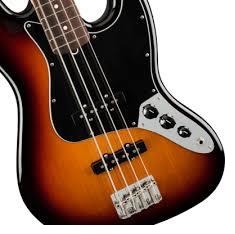
https://soundcloud.com/user-646279677 BiaB 2026 Windows For me there’s no better place in the band than to have one leg in the harmony world and the other in the percussive. Thank you Paul Tutmarc and Leo Fender.
Gracie Terzian seems to use "scale" and "key" interchangably. Are they the same?
Not quite, but probably close enough for the moment. A song is in a key and that key, by default, uses the notes from the scale, however there are other scales that could also be used with that key. A prominent example is that all major keys have a "relative minor key", that uses exactly the same notes. But also, a player could also use the blues scale over the key and the blues scale includes note that are not in the key. Be aware of it but don't get hung up on it. Each major's relative minor starts exactly 3 semitones below the root of the major. The key signature is exactly the same. A fairly reliable check of whether a song is in major or relative minor it to look at the final chord from the song. Usually(!) that will be the key.
Originally Posted By: Bass Thumper
E-F#-G#-A-B-C#-D# we see it's root is located at clock position 4 on the circle and we have 4 sharps. (I'm thinking these 4's are unrelated since at clock position 11, F we, certainly can't have 11 sharps or 11 flats).
They are related, but we stop the sharps and flats at 7 as that's all we can have in an octave.. on a piano, that's the five black keys plus the 'odd' B#/Cb and E#/Fb.
Originally Posted By: Bass Thumper
I also notice in this table that for all keys/scales the 1,4 and 5 scale numbers correspond to "major chords". Do you know what that is telling me or what the significance of that is?
It's just how a major scale is defined. Don't worry about the following for now, but at some stage it may well become of interest ... there are also "modes" aka "church modes", which use exactly the same notes as the major scale, but each mode starts on a different note from the scale. They're a powerful concept, but will likely give you a headache if you try to understand them now.
Originally Posted By: Bass Thumper
Also, this table is restricted to major keys. Is there a separate table restricted to minor keys? If so, would the next inner circle dictate these keys/scales?
The key we normally know as minor is the relative minor. It's the most common of the modes I mention above. There are many scales and they have sometimes remarkably different characters. Again, don't worry about them now. The one other scale that is probably well worth knowing is "the blues scale". It's fairly common, it's fairly easy to get to grips with and it has that nice blues feel.
Jazz relative beginner, starting at a much older age than was helpful. AVL:MXE Linux; Windows 11 BIAB2026 Audiophile, a bunch of other software. Kawai MP6, Ui24R, Focusrite Saffire Pro40 and Scarletts .
Don't worry about the following for now, but at some stage it may well become of interest ...
Thanks for understanding where I'm currently at in the subject (baby step #1) . But I can say that my journey has begun . . .
https://soundcloud.com/user-646279677 BiaB 2026 Windows For me there’s no better place in the band than to have one leg in the harmony world and the other in the percussive. Thank you Paul Tutmarc and Leo Fender.
I'm reminded of an old story, Bass Thumper, about the jazz great who was asked if he had taken lessons to read music. "Yes, he said, but not enough to hurt my playing."
Incidentally, I screen shot that table & gave copies to a musician Sunday who had inquired about the 1-4-5 progression, specifically in regards to adapting to the variety of keys. ( I deleted the Db , Gb, Cb, for simplicity sake.) So, thanks for that. And, yeah, the minor scales require a "Minor Keys" chart. The quick rule of turning a major into a minor chord is to flat the three of the major chord. In other words, if D Major chord is D-F#-A, the D Minor chord is D-F-A. The one three five refers to chords; meaning, the first, third, and fifth degree of the scale (D-E-F#-G-A-C-B-C#-D) as opposed to the chord progression such as 1-4-5, or D-G-A.
Incidentally, a good place to start is to learn the 1-3-5's of each note in the 12 note scale. Commit to memory and you'll know the 12 major chords, including some you'll see little of.
Chord progression is something that has developed as composers sought to create a framework for the listeners. This is apparent to those who have studied the hymnals of previous centuries. We find the system is based on relative emotional triggering. Cmaj as a root chord has this driving sort of congregational feel to it. Yet, play that same Cmaj in a compostion in which the C note is the 5th; namely the key of F, and it takes on the quality of tension, urging a return to the root. Here again, the rules are general. Then there is the theory of harmony.
"Hey everybody, if it helps, the notes of the C Major scale are 7, Pineapple, 24, Bb, Tomato, 12, and Gravy."
A pineapple, tomato and gravy sandwich? I can C major problems ordering this at your local Subway shop 24 7. Especially when they close at 12 midnight.
But then again, life would Bb without music
Last edited by Bass Thumper; 08/01/2212:53 PM.
https://soundcloud.com/user-646279677 BiaB 2026 Windows For me there’s no better place in the band than to have one leg in the harmony world and the other in the percussive. Thank you Paul Tutmarc and Leo Fender.
You all know about colors to pitches, yes? Red yellow white is C D E for example. It has odd applications to music. Some folks with perfect pitch claim to be able to associate pitches with color. A few composers in history have used this color association for the right mood.
BIAB 2026 Win Audiophile. Software: Fender Studio One 8, Swam horns, Acoustica-7, Notion 6, Song Master Pro, Win 11 Home. Hardware: Intel i9, 32 Gb; Fender Quantom HD8 & Faderport 8, Royer 121, Adam Sub8 & Neumann 120 monitors.
A pineapple, tomato and gravy sandwich? I can C major problems ordering this at your local Subway shop 24 7. Especially when they close at 12 midnight.
But then again, life would Bb without music
Perhaps the wittiest comeback I have ever read on this forum, hands down.
Congrats, sir. You win.
BUT, I will not be defeated! I will brandish arms with you again, good fellow and next time I will be victorious!!!!!!!
But you own the field for now.
Well played.
David Snyder Songwriter/Renaissance Man Studio + Fingers
Now here is an interesting “interactive” Circle of 5ths which may help some folk learn what at first seems like a complex subject. The subject remains complex I guess but this site makes a fair bit of sense.
Some folks with perfect pitch claim to be able to associate pitches with color.
I had not heard about this condition, my pitch is approximately plus or minus 1 semitone Could this be why I never detected a problem with A Long and Winding Road ?
Last edited by Bass Thumper; 08/02/2203:03 AM.
https://soundcloud.com/user-646279677 BiaB 2026 Windows For me there’s no better place in the band than to have one leg in the harmony world and the other in the percussive. Thank you Paul Tutmarc and Leo Fender.
I will brandish arms with you again, good fellow and next time I will be victorious!!!!!!!
Mine dear fellow, 'i regards to the challenge thou propose i might not but take adequate time to reflect and ponder forthrightly thy crave. That we both be gentlemen of the high regard, we might not but take upon such activities not with frivoulous forswear and disregard yet with deep consultations and adhearance to the moral thresholds that such men aspire. Not least of what be the import for the fair maidens amonst us that might not but be shielded from all manner of ungentlemanly discourse. If such challenge be accepted it shall be uncovered that henceforth mine honor hath yet be tarnished.
Most evident it is that thou hast experience 'i such contests. Yet moe than experience be required to win victorious 'i the heat of the broil. Therfore and 'i the spirit of honor and kindness, i shall prevail to offer an gentle 'scape from certain defeat should'st thou be inclined to accept such exuent.
Most sincerely and 'i humble office, lord bassthumber of the tudor estate
https://soundcloud.com/user-646279677 BiaB 2026 Windows For me there’s no better place in the band than to have one leg in the harmony world and the other in the percussive. Thank you Paul Tutmarc and Leo Fender.
Generally, the books are good. Lot's of people say "I'm not a dummy, I won't buy it". They're not for dummies. They're for people of all abilities.
My Music Theory for [Non] Dummies, 4th edition by Michael Pilhofer, MM?, and Holly Day arrived from Amazon, US$16.89
The first thing I did was grab my roll of masking tape and Sharpie marker and replaced "Dummies" with "Newbies". [Sometimes in life one must control the narrative]
The 2nd thing I did was my usual new book aroma test. Nothing like the smell of a brand new book; it passed.
The 3rd thing was to check the Table of Contents Introduction Part 1: Getting Started with Music Theory Part 2: Putting Notes Together Part 3: Musical Expressions through tempo and Dynamics Part 4: Musical Expression Through Form Part 5: The Part of Tens Part 6: Appendicies
The 4th thing I did was read the Introduction. Some notable info: 1. Even the most basic music theory training gives you the information you need to expand your range and abilities as a musician. 2. This book is written for the following types of musicians (which, frankly, cover the gamut) >> The absoulte beginner >> The music student who drifted away >> The experienced performer
The 5th thing I did was to check if it has an index, yep it does. And several pages show up under "Circle of Fifths" in the index.
There is also a link to online material containing chord progressions and other stuff.
So far I like it . . .
https://soundcloud.com/user-646279677 BiaB 2026 Windows For me there’s no better place in the band than to have one leg in the harmony world and the other in the percussive. Thank you Paul Tutmarc and Leo Fender.
Incidentally, I screen shot that table & gave copies to a musician Sunday who had inquired about the 1-4-5 progression, specifically in regards to adapting to the variety of keys. ( I deleted the Db , Gb, Cb, for simplicity sake.) So, thanks for that.
Glad that the major key table was worthy of sharing. I haven't been able to find such a table that links the keys to the clock position on the circle of 5ths . . so I built one.
Here is my crack at the same table for the minor keys. I have "?" for the chord designations because I don't yet know if they are different from that of the major keys. Please let me know if you spot any errors.
Last edited by Bass Thumper; 08/05/2201:36 PM.
https://soundcloud.com/user-646279677 BiaB 2026 Windows For me there’s no better place in the band than to have one leg in the harmony world and the other in the percussive. Thank you Paul Tutmarc and Leo Fender.
Awesome job, Bass Thumper. It occurred to me how helpful this would be, but I was self conscious about bringing it up. Now, you went and made the chart! These two charts replace dozens of little disassociated diagrams. The piano player I gave your Major Scale chart to made copies for the worship team. She was excited about having it!
Somewhere along the way I learned the triads and their inversions on guitar. It was a surprising fast study that paid immediate dividends.
Awesome job, Bass Thumper. It occurred to me how helpful this would be, but I was self conscious about bringing it up. Now, you went and made the chart!
Hey Ed, thanks for kind words. This sort of thing helps cement the material in my own head and I've recieved so much from others at this forum so why not share the little I have?
I'm sure there are other chunks of music theory info out there that needs to be consolidated or presented in a way that connects dots. Let me know if you become aware of any.
Also, I edited the above table to show the "m" after the chord names to distinguish them more clearly from the major keys.
https://soundcloud.com/user-646279677 BiaB 2026 Windows For me there’s no better place in the band than to have one leg in the harmony world and the other in the percussive. Thank you Paul Tutmarc and Leo Fender.
Good show, Bass Thumper. I changed the title to Minor Scales and added footnotes on Minor Scale intervals: root, whole, half, whole, whole, half, whole. and a note to how to write the minor scale that is, flat the 3, 6, and 7. Also, turn a major chord to a minor by flat the 3rd degree. D-F#-A becomes D-F-A etc.
In working on my next song I stumbled upon a pair of chords that are very pleasing to me and that I think I've heard in songs over the years. It's Asus(A-D-E, 1-4-5, tension) followed by A (A-C#-E, 1-3-5, release).
If you type Asus into bars 1, 2 and 3 and A in bar 4, you'll hear a subtle but pleasing resolution happen.
My question is, can I do anything as a bass player to support/enhance this tension and release or is that the job of the other instruments like piano or guitar? I'm thinking my presense on the root is what's important to maintain a consistent firm footing for the band. If this is correct, is there anything in BiaB I can do to enhance this effect?
Does the Circle of 5ths have any bearing on what's going on here?
My "Newbies" book may address some of this at some point but I've only made it to chapter 4.
https://soundcloud.com/user-646279677 BiaB 2026 Windows For me there’s no better place in the band than to have one leg in the harmony world and the other in the percussive. Thank you Paul Tutmarc and Leo Fender.
There are no rules set in stone when it relates to music!
There are a number of things I would do to enhance the sus to major chord transition. For example I might play a D note for the first three measures then a C# to A in the fourth measure. Or an A for the first two measures, a D for the third and a C# in the fourth. Or A for the first two measures, an A to D in the third and again a C# to A in the fourth. It also depends on what the other musicians and the lead(s) are playing. It also depends if you want or need to enhance the transition. You are not limited to playing the tonic on the bass for every chord.
Just play around and see what is best for you. YMMV
Life is short so make sure you spend as much time as possible on the Internet arguing with strangers.
64 bit Win 10 Pro, the latest BiaB/RB, Roland Octa-Capture audio interface, a ton of software/hardware
Thanks Mario, you're right, I don't necessarily need to be constrained to the root or 5th in order to support the flow.
For grins I built a snippet that runs 4 cycles of Asus, Asus, Asus, A; followed by 4 cycles of Bsus, Bsus, Bsus, B and then 4 cycles of the Asus phrase again. I added sax just to liven it up a bit.
For each of the sus chords I'm playing the 1-4-5 but on the non-sus chords I'm doing 3 beats of the 3rd (3 beats so that it's easily heard). For A it's a C# and for B it's a D#. And it works. This is definately supporting the tension-release.
You can learn a lot just by playing in the sandbox and I think I'm slowly learning how music works. One "rule" for bass players might be when in doubt, break apart the chord and try the 3rd. Good stuff !!
https://soundcloud.com/user-646279677 BiaB 2026 Windows For me there’s no better place in the band than to have one leg in the harmony world and the other in the percussive. Thank you Paul Tutmarc and Leo Fender.
zplane recently interviewed Peter Gannon, the founder and creator of Band-in-a-Box, about the software's early days, what sets it apart from AI, how zplane's audio algorithms are used in Band-in-a-Box, and more!
Special thanks to the team at zplane for their continued support.
Last Chance! The Band-in-a-Box® 2026 for Mac® Special Ends Today (May 31, 2026) at 11:59pm PDT!
Time really is running out! Save up to 50% on Band-in-a-Box® 2026 for Mac® upgrades and receive a FREE Bonus PAK—only when you order by 11:59 PM PDT today!
We've added many major new features and new content in a redesigned Band-in-a-Box® 2026 for Mac®!
Version 2026 introduces a modernized GUI redesign across the program, with updated toolbars, refreshed windows, smoother workflows, and a new Dark Mode option. There’s also a new side toolbar for quicker access to commonly used windows, and the new Multi-View feature lets you arrange multiple windows as layered panels without overlap, making it easier to customize your workspace.
Another exciting new addition is the amazing new AI-Notes feature, which can transcribe polyphonic audio into MIDI. View the results in notation or play them back as MIDI, and choose whether to transcribe an entire track or transcribe specific parts like drums, bass, guitars/piano, or vocals. There's over 100 new features in Band-in-a-Box® 2026 for Mac®.
There's an amazing collection of new content too, including 202 RealTracks, new RealStyles, MIDI SuperTracks, Instrumental Studies, “Songs with Vocals” Artist Performance Sets, Playable RealTracks Set 5, two RealDrums Stems sets, and much more!
Upgrade your Band-in-a-Box for Mac® to save up to 50% on most Band-in-a-Box® 2026 upgrade packages!
Plus, when you order your Band-in-a-Box® 2026 Mac upgrade during our special, you'll receive a Free Bonus PAK of exciting new add-ons.
If you need any help deciding which package is the best option for you, just let us know. We are here to help!
Band-in-a-Box® 2026 Mac Special Offers Extended Until May 31st!
Good news- we've extended our Band-in-a-Box® 2026 for Mac® special offers until May 31, 2026!
Band-in-a-Box® 2026 is packed with major new features, enhancements, and an incredible lineup of new content! The program now sports a sleek, modern GUI redesign across the entire interface, including updated toolbars, refreshed windows, smoother workflows, a new dark mode option, and more. The brand-new side toolbar provides quicker access to key windows, while the new Multi-View feature lets you arrange multiple windows as layered panels without overlap, creating a flexible, clutter-free workspace. We have an amazing new “AI-Notes” feature. This transcribes polyphonic audio into MIDI so you can view it in notation or play it back as MIDI. You can transcribe an entire track (all pitched instruments and drums) or focus on individual parts like drums, bass, guitars/piano, or vocals. There's an amazing collection of new content too, including 202 RealTracks, new RealStyles, MIDI SuperTracks, Instrumental Studies, “Songs with Vocals” Artist Performance Sets, Playable RealTracks Set 5, two RealDrums Stems sets, and much more!
There are over 100 new features in Band-in-a-Box® 2026 for Mac®.
When you order purchase Band-in-a-Box® 2026 before 11:59 PM PDT on May 31st, you'll also receive a Free Bonus PAK packed with exciting new add-ons.
Check out the Band-in-a-Box® for Mac packages page to find the best package for you.
Today's the Last Day of the Band-in-a-Box 2026® for Mac Special!
Order before 11:59pm PDT today (May 15, 2026) to save up to 50% off your Band-in-a-Box® 2026 for Mac® upgrade and receive a FREE Bonus PAK loaded with great new Add-ons to use with this new version!
Band-in-a-Box® 2026 for Mac - Special Offers End at 11:59pm PDT on Friday, May 15th, 2026!
Order before 11:59pm PDT on Friday, May 15th and SAVE up to 50% on most Band-in-a-Box® version 2026 for Mac Upgrade packages... and that's not all! With your version 2026 for Mac purchase, we'll include a Bonus PAK full of great new Add-ons FREE! Upgrade to the 2026 49-PAK to receive even more NEW Add-ons including 20 additional RealTracks... that's 222 NEW RealTracks available with version Band-in-a-Box® 2026 for Mac!
Upgrade to Band-in-a-Box® 2026 for Mac® today for as little as $49! Check out the Band-in-a-Box® packages page for all available purchase options.
Learn more about the Free Bonus PAK and 49-PAK here.
If you have any questions about which package is the best option for you, just let us know. We're here to help!
202 New RealTracks Released with Band-in-a-Box 2026!
With Band-in-a-Box® 2026, we've released 202 incredible new RealTracks (in sets 468-488) in a variety of genres—featuring your most requested styles!
Jazz, Funk & World (Sets 468-475):
Our new jazz, funk & blues RealTracks include a groovin’ collection of RealTracks and RealDrums! These include more requested “soul jazz” RealTracks featuring artists Neil Swainson (bass), Charles Treadway (organ), Brent Mason (guitar), and Wes Little (drums). There are new “smooth jazz” styles (4), which include a RealTracks first: muted trumpet, as well as slick new smooth jazz brushes options for drums. Blues lovers will be thrilled—there are more “classic acoustic blues” styles, including guitar (5), bass (4), and drums (10) with blues master Colin Linden, featuring understated and tasty background acoustic soloing, plus brushes drums and acoustic bass. There are also new electric blues RealTracks, including electric blues with PG favorite Johnny Hiland (3) and soulful electric slide guitar from Colin Linden (4). If you love funk & gospel, there are great new options this year, including gospel organ (3) from Charles Treadway, as well as new funk, tango, and rock ’n’ roll drums (3) and bass (1). And for big, bold arrangements, we have uptempo soul horns (4) featuring a three-part hip horn section with options for a full mix or stems of each individual horn — plus an accompanying rhythm section (4) of drums, bass, guitar, and electric piano!
Rock & Pop (Sets 476–482):
Our new rock & pop RealTracks bring a powerful mix of requested favorites, fresh genres, and modern chart-inspired styles! We have more of our popular “Producer Layered Acoustic Guitars (15)” featuring Band-in-a-Box favorite Brent Mason. We’ve continued our much-requested disco styles (10), and added new Celtic guitar (5) with a more basic, accessible approach than our previous Drop-D or DADGAD offerings. There are also highly requested yacht rock styles (17), inspired by the smooth, polished soft-rock sound of the late ’70s and early ’80s — laid-back grooves, silky electric pianos, warm textures, elegant harmonic movement, and pristine production aesthetics. Fans of heavier styles will love our new glam metal (13), capturing the flashy, high-energy sound of ’80s arena-ready guitar rock. We also have a set of rootsy modern-folk rock (18), with a warm, organic sound combining contemporary folk textures and driving acoustic strumming. And we’ve added lots of new modern pop styles (16) — the kinds of sounds you’re hearing on the radio today, featuring exciting new drums, synths, and cutting-edge RealTracks arrangements.
Country, & Americana (Sets 483–488):
Our new country & Americana RealTracks deliver a rich collection of acoustic, electric, and roots-inspired styles! We have new country pop (9) with legendary guitarist Brent Mason. There is also a potpourri (14) of bouzouki, guitars, banjo, and more, perfect for adding texture and character to contemporary acoustic arrangements. We’ve added funky country guitar (5) with PG favorite Brent Mason, along with classic pedal steel styles (5) featuring steel great Doug Jernigan. There are more country songwriter styles (8) that provide intimate, rootsy foundations for storytelling and modern Americana writing. Finally, we have “background soloing” acoustic guitar (12) with Brent Mason — simpler, but still very tasty acoustic lines designed to sit beautifully behind vocals or act as a subtle standalone solo part.
And, if you are looking for more, the 2026 49-PAK (for $49) includes an impressive collection of 20 bonus RealTracks, featuring exciting and inspiring additions to add to your RealTracks library. You'll get new country-rhythm guitar styles from PG Music favorites Johnny Hiland and Brent Mason, along with modern-pop grooves that capture today’s radio-ready sound! There are also new indie-folk styles with guitar, bass, 6-string bass used as a high-chording instrument, acoustic guitar, and banjo. Plus, dedicated "cymbal fills" RealDrums provide an added layer that work very well with low-key folky styles with other percussion.
The 2026 49-PAK is loaded with other great new add-ons as well. Learn more about the 2026 49-PAK!
One of our representatives will be happy to help you over the phone. Our hours of operation are from
6:00AM to 6:00PM PST (GMT -8) Monday thru Friday, and 8:00AM to 4:00PM PST Saturday. We are closed Sunday. You can also send us your questions via email.
One of our representatives will be happy to help you on our Live Chat or by email. Our hours of operation are from
6:00AM to 6:00PM PST (GMT -8) Monday thru Friday; 8:00AM to 4:00PM PST (GMT -8) Saturday; Closed Sunday.



 .
.







 Dansk
Dansk Deutsch - Windows
 Español
 Français - Windows
 Italiano - Windows
 Nederlands
 Polski
 Português
 Svenskt
 русский
 Japanese
 Simplified Chinese
 Traditional Chinese
 Korean