I understood that the reference to the number 1 chord was referring to the "first chord displayed in the table, i.e. the chord at the top of the list".
BIAB & RB2026 Win.(Audiophile), Windows 10 Pro & Windows 11, Cakewalk Bandlab, Izotope Prod.Bundle, Roland RD-1000, Synthogy Ivory, Session Keys Grand S & Electric R, Kontakt, Focusrite 18i20, KetronSD2, NS40M, Pioneer Active Monitors.
BTW, in Britain we have an expression "That's not cricket", referring of course to the game not the insect, and it means "not playing by the spirit of the game".
I never understood that game. Being an old baseball catcher I can't relate to a game where every pitch has to bounce in the dirt.
Just think of all the white key goodness in the key of C! You get C, Dm, Em, F, G... great key. I asked a pro jazz piano player (Miss you Cecil Ramirez. RIP amigo.) why Db is so popular. His answer was something I was never aware of or even considered. He said he loves Db because most of the keys you play in Db are black keys and they are easier to play by touch because they stand up. NEVER did that even cross my mind. And a few others agreed so I'll accept that as truth.
I understood that the reference to the number 1 chord was referring to the "first chord displayed in the table, i.e. the chord at the top of the list".
BTW, in Britain we have an expression "That's not cricket", referring of course to the game not the insect, and it means "not playing by the spirit of the game".
I never understood that game. Being an old baseball catcher I can't relate to a game where every pitch has to bounce in the dirt.
I think few people really understand all the "laws" of Cricket. We do, though, understand enough to enjoy it. A proper test match takes five days, which might be considered excessive, and sometimes I puzzle over how the final score works out.
FWIW, I don't understand American Football. Does the ball even matter?
Originally Posted by eddie1261
... why Db is so popular.
Oh yes ... and all the black notes are also pentatonic, so what's not to love about it? Hmm, well, not much tension, so we'll probably not stay there....
Jazz relative beginner, starting at a much older age than was helpful. AVL:MXE Linux; Windows 11 BIAB2026 Audiophile, a bunch of other software. Kawai MP6, Ui24R, Focusrite Saffire Pro40 and Scarletts .
Mr. Halloran did not blunder, however he could have been less blunt and given more explanation.
Mario, I will respectfully disagree that Mr. Halloran did not make a blunder and I’ll explain in a bit.
But let’s zoom out. We had just come off of a nice cordial, harmonious, professional and engaging discussion here https://www.pgmusic.com/forums/ubbthreads.php?ubb=showflat&Main=102870&Number=781164 where you, Gordon and especially Dan participated in a chat about minor chords. Mr. Halloran was (thankfully) nowhere to be found. I, and I’m sure others learned a lot in that discussion.
Fast forward about a day to this thread where I wanted to solidify and extend my new-found chord decomposition knowledge. In this thread my goal was to have folks confirm or deny my table of Dom 7 chords.
My question was simple, clear and to the point: “Does this table make sense?” [Scroll to the top and see it].
The 1st reply was from Mr. Halloran; he said “No. The #1 chord of a Dominant C7 is F, not C. C7 is the #5 chord ” He also said “You would benefit by learning a little chord theory.”
1. Eddie then says “Huh . . . his C is exactly right.” 2. AudioTrack then says “The number 1 chord of Thumper's chart certainly looked correct to me.” 3. I then did a Google “C7 stands for a dominant seventh chord, spelled C E G Bb. Specifically, it is a major triad (C E G) with an added minor seventh (Bb)” 4. Notes then says “So the dominant 7th chord uses the major scale triad C E G and adds the minor 7th, Bb”
Btw, for C7 my table shows C E G Bb which agrees with each of the 4 sources above.
So how is it that my table doesn’t make sense as claimed by Mr. Halloran ??? Once again, is Mr. Hollaran now smarter than Google and the other three?
Yes, that was a good conversation about minor chords.
Yes your chart made perfect sense. As mentioned previously what is a #1 chord? If you are talking just chords then yes it is the #1 chord. If you are talking about chord progressions and the key signature is F then the C7 is the 5th chord and F is the #1 chord. I believe that was his point, however bluntly posted.
This brings up a couple of problems: 1-Chord numbering leads to these kinds of problems, as indicated via a number of other threads. 2-Asking for theory help on any forum can be problematic. Without a basic understanding of music theory it can lead to total confusion, much like this thread. Although I don't like the title of those dummy books they do contain great information. Maybe this Music theory for Dummies book will help build a solid music theory foundation: https://www.wiley.com/en-us/Music+Theory+For+Dummies%2C+4th+Edition-p-9781119575528
Originally Posted by Bass Thumper
This is why I use the terms greener, adolescent and blunder. If my table didn’t make sense, others here with credentials would have so stated. Indeed, if you think my table makes no sense, do tell why. I respect people who speak the truth.
FWIW, he is right about something, I would benefit by learning a little chord theory. But equally true is so would he, as well as written English and fact checking.
The solution to this is for him to refrain from blundering up my posts in the future; hopefully he will agree.
As for the “Extract Audio From Silent Videos” article, I read it and watched the video. I fail to see how that is relevant to the conversion algorithm that RealNetworks uses in RealPlayer. Are you saying that MIT, Microsoft and Adobe also worked on RealPlayer?
No, I am saying the terminology of RealPlayer is very misleading.
Life is short so make sure you spend as much time as possible on the Internet arguing with strangers.
64 bit Win 10 Pro, the latest BiaB/RB, Roland Octa-Capture audio interface, a ton of software/hardware
I think I know some music theory and I have no idea what Mike meant.
In your chart, I would only suggest that you need to be consistent with flats and sharps and use the enharmonic spellings. This may well lead to E# instead of F, for example, or even a double flat etc.
The way I learned it, to spell a triad, you always skip a letter. So it’s either C# E# G# , or perhaps better, Db F Ab
Thanks for the input Matt. If you have no idea what Mike meant, imagine where I am on his comment
Your input on the enharmonic spellings is the kind of value-added feedback I was hoping to recieve. It sounds like there is nothing structurally wrong with my table, which is good confirmation for someone like me who is just learning this stuff. So I will ignore Mike's "No" and replace it with a "Yes". But enharmonically/symbolically there are some issues; got it.
Brain 1 says "Fix those enharmonic issues because it will pay dividends later" Brain 2 says "No problem dude, when you pick up your bass and jam, all is well if you can find those notes on the fretboard" Maybe (for me) the best table would have both enharmonically correct symbology and "simple" symbology (no E#, Cb, ##, etc.)
Based on your input, Eddie's table with Dan's correction and my table are both enharmonically wrong because both have simple symbology. Can you point me to an enharmonically correct table?
I also notice that Eddie made a neat connection to the circle of fifths that might bring further insights if I do some drilling.
Here is my table again for easy reference.
https://soundcloud.com/user-646279677 BiaB 2026 Windows For me there’s no better place in the band than to have one leg in the harmony world and the other in the percussive. Thank you Paul Tutmarc and Leo Fender.
I think I know some music theory and I have no idea what Mike meant.
In your chart, I would only suggest that you need to be consistent with flats and sharps and use the enharmonic spellings. This may well lead to E# instead of F, for example, or even a double flat etc.
The way I learned it, to spell a triad, you always skip a letter. So it’s either C# E# G# , or perhaps better, Db F Ab
Matt, correct me if I'm wrong but I was taught technically notes must be inline with the chord and key signature. I know that was a long time ago but in a sharp keys all notes outside the key signature must be sharps; I know that has changed. So the notes should be C#, E#, and G# and not Db, F, or Ab, however I would prefer to see Db, F, or Ab.
Life is short so make sure you spend as much time as possible on the Internet arguing with strangers.
64 bit Win 10 Pro, the latest BiaB/RB, Roland Octa-Capture audio interface, a ton of software/hardware
I still want to know what “The number 1 chord" is supposed to mean.
I think that what he means is that it's the '1' chord to which a dominant 7 would reasonably, but not necessarily, be expected to resolve.
Two obvious points here:
1) It would have been better if that had been made clear in the first place, rather than a bunch of us trying to decipher a short, perhaps clumsy, sentence.
2) BassThumper was expressly asking for feedback to help him firm up on some of his chord theory, so "you would benefit from a little chord theory" is perhaps not an entirely helpful comment.
Yes Gordon +1 on both of your points. Especially point 2 . . . . I am benefitting from a little chord theory by way of Dan's Music Theory 101 Course which so far has been tuition free Which is OK because when he needs help on the hyper-geometeric statistical distribution or the finer points of the 2-parameter Weibull, I'm at his beck and call
https://soundcloud.com/user-646279677 BiaB 2026 Windows For me there’s no better place in the band than to have one leg in the harmony world and the other in the percussive. Thank you Paul Tutmarc and Leo Fender.
The standard joke used to be "Just play everything in C to avoid those black keys." And then up comes a dominant 7th and blows that whole theory up.
Make no mistake, I didn't select Dom 7 chord spellings to examine because I'm some kind of "arsonist" that wants to blow things up. I'm just a struggling hobbiest that once wrote a song with such chords, liked the sound and want to play better bass. I need to move beyond root-fifth.
https://soundcloud.com/user-646279677 BiaB 2026 Windows For me there’s no better place in the band than to have one leg in the harmony world and the other in the percussive. Thank you Paul Tutmarc and Leo Fender.
I think that what he means is that it's the '1' chord to which a dominant 7 would reasonably, but not necessarily, be expected to resolve.
... which also conflicted with the purpose of the table, which was to check BT's understanding of the notes in the chord, not the notes in the scale. Didn't I make a mistake like that recently somewhere else in these fora
Once again Gordon, you are spot on. If ever I visit the UK, I'm gonna buy you a spot of tea, a pint of beer and some fish&chips You understand everything that is going on here.
https://soundcloud.com/user-646279677 BiaB 2026 Windows For me there’s no better place in the band than to have one leg in the harmony world and the other in the percussive. Thank you Paul Tutmarc and Leo Fender.
I understood that the reference to the number 1 chord was referring to the "first chord displayed in the table, i.e. the chord at the top of the list".
This is why good written English is important in forum settings . . . unless of course you speak Swheli in which case English is not too important.
https://soundcloud.com/user-646279677 BiaB 2026 Windows For me there’s no better place in the band than to have one leg in the harmony world and the other in the percussive. Thank you Paul Tutmarc and Leo Fender.
I don't know if you ever tried what I once suggested about learning the neck. Most people learn to fret from the nut until they hit the body. That has a place for learning scales. But if you learn the neck in a "planar" fashion at an angle. In your case, on a 4 string bass, your first note on an open string on the top string is a G. Find every G on every string all the way to the 15th fret on the 4th string. And work on playing G after G after G as fast as you can. That's how you learn to not play everything based around the 3rd fret. Then work on playing intervals and patterns in every key and in every position on the neck. About 95% of the bass players I ever knew played almost nothing but root notes and in the same place on the neck. So to relate to the dominant 7 that was the topic, using C as the example, play C E G Bb Bb G E C, so walk up the chord and back down. Over and over, faster and faster. Then move your hand up the neck and find the next position and do it again. Also remember that you don't have to play all the notes in the same octave. You can play C3 E2 G2 Bb3 or whatever. That adds flavor.
Also watch THIS VIDEO and pay close attention to Victor Wooten explaining "wrong" notes. Watch it with whichever brain you want, but try to focus on the message. It's great stuff by one of the best out there. It will help you with "flavor". Try hard to use those scales and such and try to not turn into a boring "root notes only" bass player. You are allowed to use 3rds and 5ths. It's in the rules!!
With all the activity in this thread I almost missed this one. I'm sure this is good advice. I'm beyond only the root. With any song I compose I can pretty much do root-5th-octave in time with the drummer across the chord progression. My next level is to decompose each chord in the progression into it's constituent notes (hence the chord spelling table above) and then using some or all of these notes plus their octaves to build pleasing bass lines that keep time with the drummer and that are not overly repetitive or boring. So constructing bass lines is primarily what this is about.
Eventually I'd like to get so good at this that when I see E7 on the chord sheet for example, that my brain instantly knows E G# B & D, then my fingers know where those notes are (in more than 1 location) and my sense of timing would tell me which note to play and when so that I'm supporting the groove in a way that I'm always ready and predicting the upcoming chord. Finally, there's the matter of notes that will transtion you from one chord to the next. It's a lifetime journey and it's fun. But I have to keep the growth going; right now stagnation or plateuing is not an option.
https://soundcloud.com/user-646279677 BiaB 2026 Windows For me there’s no better place in the band than to have one leg in the harmony world and the other in the percussive. Thank you Paul Tutmarc and Leo Fender.
Can someone please define, in simplest linguistic form, what the #1 chord is with no relativity to a key. #1 of what? The first (#1) note in a scale? If that is the case, the #1 chord in C, being C, means the #1 chord is C.
Mario then said " If you are talking about chord progressions and the key signature is F then the C7 is the 5th chord and F is the #1 chord."
Well, nobody said anything about chord progressions, and the key mentioned in the original post was C. Thus C should be the #1 chord.
Also, it would be a good thing to not use pronouns like "it".
Mario said "As mentioned previously what is a #1 chord? If you are talking just chords then yes it is the #1 chord." What is the IT you are referring back to? If we are talking scales as the base to create chords, we are talking notes at that point, way short of chords having yet be created. This is why I am so confused by the #1 chord thing.
Again, someone please define #1 chord if that term does NOT mean "The chord created with the first note of the scale as the root note." I can't see any way that F would be the #1 anything in the key of C. That comment was is the first reply after the OP and I have been trying since to get a definition of what "the #1 chord" is. Very confusing.
Can someone please define, in simplest linguistic form, what the #1 chord is with no relativity to a key. #1 of what?
I'll have a go. I think we're probably all, or at least mostly, agreed that Mike's comment was confusing".
BTW, I pretty sure you know the following and have just been confused by Mike's wording. The use of # to mean 'number' not 'sharp' probably also didn't help.
The Dominant 7 chord is the cornerstone of this.
In any major scale there is just one dominant 7 (V7) chord, it's root is on the fifth note of the scale and it wants strongly to resolve to the root of that scale. If we're in the key of C major, the dominant 7 will be the G7 and the root of the scale will be the CMaj. That V7->I move is very common indeed, precisely because it's such a strong resolution. One of the consequences of that is that the V7 is also usually often a clue that we're about to resolve and because it's usually V7->I we already know where it's (probably) going.
Mike picked out BassThumper's C7 entry and said that the '#1' (meaning the root of the scale) was F, which is correct for a C7 progression, but BassThumper's chart was showing the notes in the chordnot the notes/chords in the scale/progression.
Putting that another way: BassThumper's table showed C7 contains notes C, E, G, Bb Mike Halloran says C7 resolves to F. That's true enough, but is a completely unrelated and confusing statement.
Mike seems sometimes to latch onto something and then fail to see the intended context in which that something was written.
Jazz relative beginner, starting at a much older age than was helpful. AVL:MXE Linux; Windows 11 BIAB2026 Audiophile, a bunch of other software. Kawai MP6, Ui24R, Focusrite Saffire Pro40 and Scarletts .
I understood that the reference to the number 1 chord was referring to the "first chord displayed in the table, i.e. the chord at the top of the list".
But then how is it F?
I agree, I still have no idea how or why F became involved.
BIAB & RB2026 Win.(Audiophile), Windows 10 Pro & Windows 11, Cakewalk Bandlab, Izotope Prod.Bundle, Roland RD-1000, Synthogy Ivory, Session Keys Grand S & Electric R, Kontakt, Focusrite 18i20, KetronSD2, NS40M, Pioneer Active Monitors.
I understood that the reference to the number 1 chord was referring to the "first chord displayed in the table, i.e. the chord at the top of the list".
But then how is it F?
I agree, I still have no idea how or why F became involved.
Because of what Mike said as shown here, "Mike picked out BassThumper's C7 entry and said that the '#1' (meaning the root of the scale) was F, which is correct for a C7 progression, but BassThumper's chart was showing the notes in the chord not the notes/chords in the scale/progression."
I was trying to explain what Mike meant. I apologize for any confusion I may have caused.
Life is short so make sure you spend as much time as possible on the Internet arguing with strangers.
64 bit Win 10 Pro, the latest BiaB/RB, Roland Octa-Capture audio interface, a ton of software/hardware
The lesson here is - Just as important as the question one asks, is who one asks. As a result best not to take an introductory course in Music theory from the University of PGM Forum.
I think I know some music theory and I have no idea what Mike meant.
In your chart, I would only suggest that you need to be consistent with flats and sharps and use the enharmonic spellings. This may well lead to E# instead of F, for example, or even a double flat etc.
The way I learned it, to spell a triad, you always skip a letter. So it’s either C# E# G# , or perhaps better, Db F Ab
Matt, correct me if I'm wrong but I was taught technically notes must be inline with the chord and key signature. I know that was a long time ago but in a sharp keys all notes outside the key signature must be sharps; I know that has changed. So the notes should be C#, E#, and G# and not Db, F, or Ab, however I would prefer to see Db, F, or Ab.
True. But I'm totally lost here as to what is desired. Aren't we just making a table for quick reference to see the notes in a dominant 7th chord? Does the key of the imaginary song matter for this table?
For example, let's take just those first two lines that we were given: C7 = C E G Bb C#7 = C# F G# B
Well, that second line should technically be C# E# G# B
If I could in a song, I would rather think of it as Db F Ab Cb
and truth be told, I would consider that Cb as being B for practical purposes unless I'm writing a score. In an orchestra score, where the part may get transposed, this matters.
Finally, and I probably shouldn't mention this, I've noticed the new trend of many composers and arrangers in jazz and modern music to use no key signature at all. Everything is written in the 'key' of C. Accidentals are shown as needed on all notes. Transposed instruments also read their part in the 'key' of C. It takes some getting used to, and still spawns arguments.
BIAB 2026 Win Audiophile. Software: Fender Studio One 8, Swam horns, Acoustica-7, Notion 6, Song Master Pro, Win 11 Home. Hardware: Intel i9, 32 Gb; Fender Quantom HD8 & Faderport 8, Royer 121, Adam Sub8 & Neumann 120 monitors.
zplane recently interviewed Peter Gannon, the founder and creator of Band-in-a-Box, about the software's early days, what sets it apart from AI, how zplane's audio algorithms are used in Band-in-a-Box, and more!
Special thanks to the team at zplane for their continued support.
Last Chance! The Band-in-a-Box® 2026 for Mac® Special Ends Today (May 31, 2026) at 11:59pm PDT!
Time really is running out! Save up to 50% on Band-in-a-Box® 2026 for Mac® upgrades and receive a FREE Bonus PAK—only when you order by 11:59 PM PDT today!
We've added many major new features and new content in a redesigned Band-in-a-Box® 2026 for Mac®!
Version 2026 introduces a modernized GUI redesign across the program, with updated toolbars, refreshed windows, smoother workflows, and a new Dark Mode option. There’s also a new side toolbar for quicker access to commonly used windows, and the new Multi-View feature lets you arrange multiple windows as layered panels without overlap, making it easier to customize your workspace.
Another exciting new addition is the amazing new AI-Notes feature, which can transcribe polyphonic audio into MIDI. View the results in notation or play them back as MIDI, and choose whether to transcribe an entire track or transcribe specific parts like drums, bass, guitars/piano, or vocals. There's over 100 new features in Band-in-a-Box® 2026 for Mac®.
There's an amazing collection of new content too, including 202 RealTracks, new RealStyles, MIDI SuperTracks, Instrumental Studies, “Songs with Vocals” Artist Performance Sets, Playable RealTracks Set 5, two RealDrums Stems sets, and much more!
Upgrade your Band-in-a-Box for Mac® to save up to 50% on most Band-in-a-Box® 2026 upgrade packages!
Plus, when you order your Band-in-a-Box® 2026 Mac upgrade during our special, you'll receive a Free Bonus PAK of exciting new add-ons.
If you need any help deciding which package is the best option for you, just let us know. We are here to help!
Band-in-a-Box® 2026 Mac Special Offers Extended Until May 31st!
Good news- we've extended our Band-in-a-Box® 2026 for Mac® special offers until May 31, 2026!
Band-in-a-Box® 2026 is packed with major new features, enhancements, and an incredible lineup of new content! The program now sports a sleek, modern GUI redesign across the entire interface, including updated toolbars, refreshed windows, smoother workflows, a new dark mode option, and more. The brand-new side toolbar provides quicker access to key windows, while the new Multi-View feature lets you arrange multiple windows as layered panels without overlap, creating a flexible, clutter-free workspace. We have an amazing new “AI-Notes” feature. This transcribes polyphonic audio into MIDI so you can view it in notation or play it back as MIDI. You can transcribe an entire track (all pitched instruments and drums) or focus on individual parts like drums, bass, guitars/piano, or vocals. There's an amazing collection of new content too, including 202 RealTracks, new RealStyles, MIDI SuperTracks, Instrumental Studies, “Songs with Vocals” Artist Performance Sets, Playable RealTracks Set 5, two RealDrums Stems sets, and much more!
There are over 100 new features in Band-in-a-Box® 2026 for Mac®.
When you order purchase Band-in-a-Box® 2026 before 11:59 PM PDT on May 31st, you'll also receive a Free Bonus PAK packed with exciting new add-ons.
Check out the Band-in-a-Box® for Mac packages page to find the best package for you.
Today's the Last Day of the Band-in-a-Box 2026® for Mac Special!
Order before 11:59pm PDT today (May 15, 2026) to save up to 50% off your Band-in-a-Box® 2026 for Mac® upgrade and receive a FREE Bonus PAK loaded with great new Add-ons to use with this new version!
Band-in-a-Box® 2026 for Mac - Special Offers End at 11:59pm PDT on Friday, May 15th, 2026!
Order before 11:59pm PDT on Friday, May 15th and SAVE up to 50% on most Band-in-a-Box® version 2026 for Mac Upgrade packages... and that's not all! With your version 2026 for Mac purchase, we'll include a Bonus PAK full of great new Add-ons FREE! Upgrade to the 2026 49-PAK to receive even more NEW Add-ons including 20 additional RealTracks... that's 222 NEW RealTracks available with version Band-in-a-Box® 2026 for Mac!
Upgrade to Band-in-a-Box® 2026 for Mac® today for as little as $49! Check out the Band-in-a-Box® packages page for all available purchase options.
Learn more about the Free Bonus PAK and 49-PAK here.
If you have any questions about which package is the best option for you, just let us know. We're here to help!
202 New RealTracks Released with Band-in-a-Box 2026!
With Band-in-a-Box® 2026, we've released 202 incredible new RealTracks (in sets 468-488) in a variety of genres—featuring your most requested styles!
Jazz, Funk & World (Sets 468-475):
Our new jazz, funk & blues RealTracks include a groovin’ collection of RealTracks and RealDrums! These include more requested “soul jazz” RealTracks featuring artists Neil Swainson (bass), Charles Treadway (organ), Brent Mason (guitar), and Wes Little (drums). There are new “smooth jazz” styles (4), which include a RealTracks first: muted trumpet, as well as slick new smooth jazz brushes options for drums. Blues lovers will be thrilled—there are more “classic acoustic blues” styles, including guitar (5), bass (4), and drums (10) with blues master Colin Linden, featuring understated and tasty background acoustic soloing, plus brushes drums and acoustic bass. There are also new electric blues RealTracks, including electric blues with PG favorite Johnny Hiland (3) and soulful electric slide guitar from Colin Linden (4). If you love funk & gospel, there are great new options this year, including gospel organ (3) from Charles Treadway, as well as new funk, tango, and rock ’n’ roll drums (3) and bass (1). And for big, bold arrangements, we have uptempo soul horns (4) featuring a three-part hip horn section with options for a full mix or stems of each individual horn — plus an accompanying rhythm section (4) of drums, bass, guitar, and electric piano!
Rock & Pop (Sets 476–482):
Our new rock & pop RealTracks bring a powerful mix of requested favorites, fresh genres, and modern chart-inspired styles! We have more of our popular “Producer Layered Acoustic Guitars (15)” featuring Band-in-a-Box favorite Brent Mason. We’ve continued our much-requested disco styles (10), and added new Celtic guitar (5) with a more basic, accessible approach than our previous Drop-D or DADGAD offerings. There are also highly requested yacht rock styles (17), inspired by the smooth, polished soft-rock sound of the late ’70s and early ’80s — laid-back grooves, silky electric pianos, warm textures, elegant harmonic movement, and pristine production aesthetics. Fans of heavier styles will love our new glam metal (13), capturing the flashy, high-energy sound of ’80s arena-ready guitar rock. We also have a set of rootsy modern-folk rock (18), with a warm, organic sound combining contemporary folk textures and driving acoustic strumming. And we’ve added lots of new modern pop styles (16) — the kinds of sounds you’re hearing on the radio today, featuring exciting new drums, synths, and cutting-edge RealTracks arrangements.
Country, & Americana (Sets 483–488):
Our new country & Americana RealTracks deliver a rich collection of acoustic, electric, and roots-inspired styles! We have new country pop (9) with legendary guitarist Brent Mason. There is also a potpourri (14) of bouzouki, guitars, banjo, and more, perfect for adding texture and character to contemporary acoustic arrangements. We’ve added funky country guitar (5) with PG favorite Brent Mason, along with classic pedal steel styles (5) featuring steel great Doug Jernigan. There are more country songwriter styles (8) that provide intimate, rootsy foundations for storytelling and modern Americana writing. Finally, we have “background soloing” acoustic guitar (12) with Brent Mason — simpler, but still very tasty acoustic lines designed to sit beautifully behind vocals or act as a subtle standalone solo part.
And, if you are looking for more, the 2026 49-PAK (for $49) includes an impressive collection of 20 bonus RealTracks, featuring exciting and inspiring additions to add to your RealTracks library. You'll get new country-rhythm guitar styles from PG Music favorites Johnny Hiland and Brent Mason, along with modern-pop grooves that capture today’s radio-ready sound! There are also new indie-folk styles with guitar, bass, 6-string bass used as a high-chording instrument, acoustic guitar, and banjo. Plus, dedicated "cymbal fills" RealDrums provide an added layer that work very well with low-key folky styles with other percussion.
The 2026 49-PAK is loaded with other great new add-ons as well. Learn more about the 2026 49-PAK!
One of our representatives will be happy to help you over the phone. Our hours of operation are from
6:00AM to 6:00PM PST (GMT -8) Monday thru Friday, and 8:00AM to 4:00PM PST Saturday. We are closed Sunday. You can also send us your questions via email.
One of our representatives will be happy to help you on our Live Chat or by email. Our hours of operation are from
6:00AM to 6:00PM PST (GMT -8) Monday thru Friday; 8:00AM to 4:00PM PST (GMT -8) Saturday; Closed Sunday.






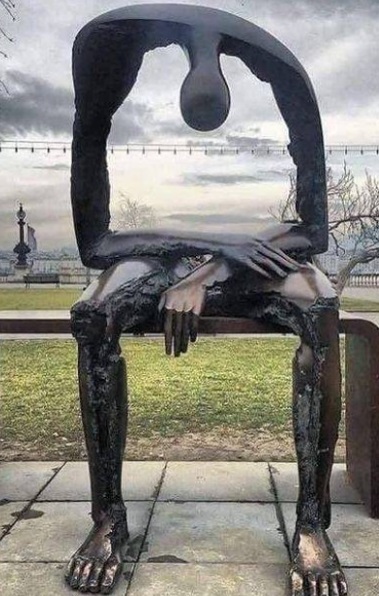
 As a result best not to take an introductory course in Music theory from the University of PGM Forum.
 Dansk
Dansk Deutsch - Windows
 Español
 Français - Windows
 Italiano - Windows
 Nederlands
 Polski
 Português
 Svenskt
 русский
 Japanese
 Simplified Chinese
 Traditional Chinese
 Korean