Today a friend of mine gave me a book he thinks I might like. The timing could not have been better because I happen to be inbetween books right now.
I've read the front and back end flaps, a few reviews of it and the first few pages of the introduction. And it appears to address the intersection of music, art, neuroscience, psychology, culture and maybe a few other domains . . . all subjects I'm fascinated by.
The author is neuroscientist but has worked as a session musician, sound engineer and a record producer. Here is a quote from page 2 of the intro.
Many years later, Paul Simon told me that the sound is always what he was after too. "The way that I listen to my own records is for the sound of them; not the chords or the lyrics - my first impression is of the overall sound."
So far, I'm very much enjoying what this guy has to say.
For others interested in these areas and who might want to read along and discuss here or privately, this is one place to purchase it.
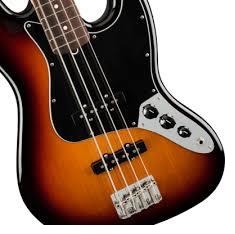
https://soundcloud.com/user-646279677 BiaB 2026 Windows For me there’s no better place in the band than to have one leg in the harmony world and the other in the percussive. Thank you Paul Tutmarc and Leo Fender.
Reading this book is quite fascinating and is exposing me to concepts I had never thought of before. Here is a quote that I can't quite make sense of. Curious if anybody musically trained can break this apart for us folk that are self-taught.
"Led Zeppelin often tuned their instruments away from the modern A440 standard to give their music an uncommon sound, and perhaps to link it with the European children's folk songs that inspired many of their compositions."
https://soundcloud.com/user-646279677 BiaB 2026 Windows For me there’s no better place in the band than to have one leg in the harmony world and the other in the percussive. Thank you Paul Tutmarc and Leo Fender.
Some folks will change their tuner to 432 Hz rather than standard 440 Hz. As you know the 440 is the standard tuning of the A note above middle C. Some folks claim benefits of listening to 432 Hz music like reducing stress, mental healing and a whole bunch of other stuff. Other people suggest they do not notice any difference.
BIAB 2026 Ultrapack- Fender Studio Pro 8, Windows 11, Mac Mini M4 with Logic Pro 11, Melodyne Studio, Luna Pro
<...snip...> Some folks claim benefits of listening to 432 Hz music like reducing stress, mental healing and a whole bunch of other stuff. Other people suggest they do not notice any difference.
The only thing I noticed was acoustic pianos all played out of tune - flat
Just kidding, of course. But seriously, I can't try that, as it's outside the range my saxophone will tune to.
It's interesting. Over seemingly centuries, everyone has had a thought on what the exact pitch of 'A' should be. The overall consensus now is that it should be 440Hz, but many artists (including Led Zepplin obviously) have chosen to alter it in an effort to create a more 'unique sound'.
(Also, the ACW would have a fit )
BIAB & RB2026 Win.(Audiophile), Windows 10 Pro & Windows 11, Cakewalk Bandlab, Izotope Prod.Bundle, Roland RD-1000, Synthogy Ivory, Session Keys Grand S & Electric R, Kontakt, Focusrite 18i20, KetronSD2, NS40M, Pioneer Active Monitors.
Some folks claim benefits of listening to 432 Hz music like reducing stress, mental healing and a whole bunch of other stuff. Other people suggest they do not notice any difference.
This is one of the baffling things to me regarding the quote. Are humans, on average, able to consciously notice a 8 Hz difference in notes (not pure tones) in a rock band that was known for ear shattering dB levels, or even at comfortable listening levels? I think no, but I could be wrong.
But even if the general untrained Zepelin fan could detect and understand sub-semitone differences how does that produce an "uncommon sound" since all you're doing is agreeing to a different frequency baseline?
And thirdly, how can non-standard tuning link to "European children's folk songs"? Wouldn't all instrument frequencies in the band be shifted up or down by the same amount?
My understanding is that we are designed to percieve and understand relative pitches in music, not absolute pitches.
I also wonder where the author got that info. If from a Zepelin interview, could that have been LSD talking??
Obviously, I'm not understanding everything regarding this quote.
https://soundcloud.com/user-646279677 BiaB 2026 Windows For me there’s no better place in the band than to have one leg in the harmony world and the other in the percussive. Thank you Paul Tutmarc and Leo Fender.
There are some who say we are all born with perfect pitch and we lose the ability to use it. The exceptions are folks from Asian countries where the inflections in words are so subtle that the ear remains attuned.
I don’t know about that.
As for pitch discrimination, I’ve know many audio engineers who were taught that people cannot distinguish a change of less than six cents. I proved I can hear down to four, but not less.
And the proponents of 432 Hz claim a mathematical origin as well as the historical precedent. Our church has a Steinway grand that was built in 1866 when it would have been perfect for a European orchestra. It can be tuned to 440 but by two days later will again be sitting happily at 432. It doesn’t help that the organ is at 442.
BIAB 2026 Win Audiophile. Software: Fender Studio One 8, Swam horns, Acoustica-7, Notion 6, Song Master Pro, Win 11 Home. Hardware: Intel i9, 32 Gb; Fender Quantom HD8 & Faderport 8, Royer 121, Adam Sub8 & Neumann 120 monitors.
Some folks claim benefits of listening to 432 Hz music like reducing stress, mental healing and a whole bunch of other stuff. Other people suggest they do not notice any difference.
This is one of the baffling things to me regarding the quote. Are humans, on average, able to consciously notice a 8 Hz difference in notes (not pure tones) in a rock band that was known for ear shattering dB levels, or even at comfortable listening levels? I think no, but I could be wrong.
But even if the general untrained Zepelin fan could detect and understand sub-semitone differences how does that produce an "uncommon sound" since all you're doing is agreeing to a different frequency baseline?
And thirdly, how can non-standard tuning link to "European children's folk songs"? Wouldn't all instrument frequencies in the band be shifted up or down by the same amount?
My understanding is that we are designed to percieve and understand relative pitches in music, not absolute pitches.
I also wonder where the author got that info. If from a Zepelin interview, could that have been LSD talking??
Obviously, I'm not understanding everything regarding this quote.
I duplicated a acoustic guitar track and then detuned one track by -8 cents and yes you can hear the chorus effect between the two tracks. However if all tracks are set to 432 can I tell the difference between the 440 and the 432 I have not done that before I suppose.
BIAB 2026 Ultrapack- Fender Studio Pro 8, Windows 11, Mac Mini M4 with Logic Pro 11, Melodyne Studio, Luna Pro
... It can be tuned to 440 but by two days later will again be sitting happily at 432. It doesn’t help that the organ is at 442.
Ouch!
BIAB & RB2026 Win.(Audiophile), Windows 10 Pro & Windows 11, Cakewalk Bandlab, Izotope Prod.Bundle, Roland RD-1000, Synthogy Ivory, Session Keys Grand S & Electric R, Kontakt, Focusrite 18i20, KetronSD2, NS40M, Pioneer Active Monitors.
................................ And the proponents of 432 Hz claim a mathematical origin as well as the historical precedent. Our church has a Steinway grand that was built in 1866 when it would have been perfect for a European orchestra. It can be tuned to 440 but by two days later will again be sitting happily at 432. It doesn’t help that the organ is at 442.
FYI - My wife's old upright piano is tuned to 432. Our now retired piano tuner said a lot of old uprights are tuned to 432 because at 440 they would not be in tune for very long. Those pianos' wooden components could not take the string tension. He was the piano tuner for the Eastman School of Music and the Hochstein School of Music, both in Rochester NY. He said those pianos were tuned to either 442 or 444 so the brightness and volume of the piano would cut through the orchestra. He also said he had a monthly agreement to retune and to replace any broken strings!
Life is short so make sure you spend as much time as possible on the Internet arguing with strangers.
64 bit Win 10 Pro, the latest BiaB/RB, Roland Octa-Capture audio interface, a ton of software/hardware
And the proponents of 432 Hz claim a mathematical origin as well as the historical precedent.
Hmmm, I think these folks might have lost the debate, my understanding is 440 is the global standard. And I'm thinking any standard is somewhat arbitrary, but it's important that the world agree on a standard.
But I'm still trying to figure out the linkage (if any) between altered tuning and Zepelin's uncommon sound/European children folk songs.
https://soundcloud.com/user-646279677 BiaB 2026 Windows For me there’s no better place in the band than to have one leg in the harmony world and the other in the percussive. Thank you Paul Tutmarc and Leo Fender.
And the proponents of 432 Hz claim a mathematical origin as well as the historical precedent.
Hmmm, I think these folks might have lost the debate, my understanding is 440 is the global standard. And I'm thinking any standard is somewhat arbitrary, but it's important that the world agree on a standard.
But I'm still trying to figure out the linkage (if any) between altered tuning and Zepelin's uncommon sound/European children folk songs.
Maybe the linkage is the fact that if said children folk songs were ancient they may have been in 432 and Led Zeppelin may have wanted to emulate that. There is a lot of controversy about what sounds better, songs in 440 or songs in 432. Through out the ages there has been no tuning standard, that is until 1955, or 1939 if you want to include the suggestion to standardize 440. If you are interested in 432 here is the history of it:
In the days of recording to tape (which was often sped up), no 440 except with tuning forks, turntables with 10% tolerance in speed, cassettes with even less precise speeds, my answer is, "Who cares".
Learning songs from recordings by ear meant adjusting the pitch of your instrument first.
In my early career, we tuned to the piano that was on every stage, and they were hardly ever at 440. There were no guitar tuners, so the guitars were tuned by from the 6th string to match the piano, and then by ear, making it a bit like just tuning, instead of equal temperament.
Then came strobe tuners, followed by digital, and I don't really know if that's an improvement or not. Some of those old 60s recordings with slightly out-of-tune guitars would not be improved if they were tuned perfectly.
As far as I'm concerned, if it sounds good to me, it is good.
There is a lot of controversy about what sounds better, songs in 440 or songs in 432. Through out the ages there has been no tuning standard, that is until 1955, or 1939 if you want to include the suggestion to standardize 440. If you are interested in 432 here is the history of it:
This is becoming a quite worthwhile discussion. For those that don’t know, a big part of music for me is all about growth and this thread is promoting growth.
The article you supplied provided at least a glimpse of all the fuss that was required to get us where we are today. Good historical info. We should all hold those that participated in the 1939 London conference in high esteem.
“The modern standard of 440 Hz became more widely accepted in the 20th century, particularly following a 1939 international conference in London. The British Standards Institution recommended 440 Hz as the standard pitch, and this tuning gained more traction globally after World War II.”
As good as that webpage is, it doesn’t shed the light I’m looking for in regards to the quote in question. So let me try this.
So you’re invited to a birthday party and you're the only muscian invited. And as they bring out the cake, someone starts singing Happy Birthday. Nobody is carrying a pocket tuner with them and no one has any preconceived ideas on “the proper key”. But as soon as the first note is sung, the entire room is able to sing along quite nicely. And even if a high-pitched woman or child starts everyone off, the low-pitch males can easily adjust their singing down an octave or two quite naturally to blend with the crowd. I find it amazing that we are wired this way.
Now back to the Zepelin quote. I’m still baffled by how an alternate tuning (432 for example) can some how create an “unusual sound” or be linked to some children’s folk song if the relationships among the notes are not altered. Presumably, the standard 440 is inadequate? For starters, who in the audience can say, “This music stinks because the tuning is all wrong”? likewise when a song is transposed say from Amaj to Cmaj (to meet the needs of a singer or other requirement) don’t we all recognize and enjoy the piece in the same way that Happy Birthday can be sung quite nicely in different keys?
I think part of the answer to all this involves “equal temperament” and how we are designed to understand and sing based on relative frequencies (the musical distance from one note to the next) as opposed to absolute frequencies.
But for that matter, I wonder if 440 tuning has its own set of compromises and is it possible that no tuning scheme is perfect in all situations? I understand that one benefit of 440 is that it allows (near?) perfect transposition.
https://soundcloud.com/user-646279677 BiaB 2026 Windows For me there’s no better place in the band than to have one leg in the harmony world and the other in the percussive. Thank you Paul Tutmarc and Leo Fender.
432 creates one more overtone within our hearing range, so there's that ..
440 has 46, 432 has 47.
If you’re counting the number of harmonics out to 20kHz, I’m not sure how relevant that is in listening to music. Many audiologists only test out to 8kHz, and many of us can't even hear out to that frequency.
20,000/440=45.5 20,000/432=46.3
8,000/440=18.2 8,000/432=18.5
What I do find interesting is how easy it is to take A440 for granted given the challenges the folks back in 1939 faced while establishing it. The more I learn about this the more I realize that a) 440Hz is to some degree arbitrary b) Much compromise was needed for this standard to be agreed upon c) A 440Hz standard is not “musically perfect” in every sense but it does solve important problems d) Musicians were happy (and are happy today with it)
I’m beginning to conclude that even with today’s computer-assisted, multi-factor optimization routines that we would not be able to come up with a practical standard meaningfully superior to A440. But then again, there’s much more of this book that remains to be read.
https://soundcloud.com/user-646279677 BiaB 2026 Windows For me there’s no better place in the band than to have one leg in the harmony world and the other in the percussive. Thank you Paul Tutmarc and Leo Fender.
[quote=MarioD]So you’re invited to a birthday party and you're the only muscian invited. And as they bring out the cake, someone starts singing Happy Birthday. Nobody is carrying a pocket tuner with them and no one has any preconceived ideas on “the proper key”. But as soon as the first note is sung, the entire room is able to sing along quite nicely. And even if a high-pitched woman or child starts everyone off, the low-pitch males can easily adjust their singing down an octave or two quite naturally to blend with the crowd. I find it amazing that we are wired this way.
Not at the birthday parties that I've attended. People start in different keys, and proceed to get louder and louder, and even less in tune at the end.
Quote
Now back to the Zepelin quote. I’m still baffled by how an alternate tuning (432 for example) can some how create an “unusual sound” or be linked to some children’s folk song if the relationships among the notes are not altered.
You're right, it's completely rubbish.
Quote
For starters, who in the audience can say, “This music stinks because the tuning is all wrong”? likewise when a song is transposed say from Amaj to Cmaj (to meet the needs of a singer or other requirement) don’t we all recognize and enjoy the piece in the same way that Happy Birthday can be sung quite nicely in different keys?
I have a singer in my Sunday group who thinks he can.
He asks if I changed the key every time he has trouble singing his part.
zplane recently interviewed Peter Gannon, the founder and creator of Band-in-a-Box, about the software's early days, what sets it apart from AI, how zplane's audio algorithms are used in Band-in-a-Box, and more!
Special thanks to the team at zplane for their continued support.
Last Chance! The Band-in-a-Box® 2026 for Mac® Special Ends Today (May 31, 2026) at 11:59pm PDT!
Time really is running out! Save up to 50% on Band-in-a-Box® 2026 for Mac® upgrades and receive a FREE Bonus PAK—only when you order by 11:59 PM PDT today!
We've added many major new features and new content in a redesigned Band-in-a-Box® 2026 for Mac®!
Version 2026 introduces a modernized GUI redesign across the program, with updated toolbars, refreshed windows, smoother workflows, and a new Dark Mode option. There’s also a new side toolbar for quicker access to commonly used windows, and the new Multi-View feature lets you arrange multiple windows as layered panels without overlap, making it easier to customize your workspace.
Another exciting new addition is the amazing new AI-Notes feature, which can transcribe polyphonic audio into MIDI. View the results in notation or play them back as MIDI, and choose whether to transcribe an entire track or transcribe specific parts like drums, bass, guitars/piano, or vocals. There's over 100 new features in Band-in-a-Box® 2026 for Mac®.
There's an amazing collection of new content too, including 202 RealTracks, new RealStyles, MIDI SuperTracks, Instrumental Studies, “Songs with Vocals” Artist Performance Sets, Playable RealTracks Set 5, two RealDrums Stems sets, and much more!
Upgrade your Band-in-a-Box for Mac® to save up to 50% on most Band-in-a-Box® 2026 upgrade packages!
Plus, when you order your Band-in-a-Box® 2026 Mac upgrade during our special, you'll receive a Free Bonus PAK of exciting new add-ons.
If you need any help deciding which package is the best option for you, just let us know. We are here to help!
Band-in-a-Box® 2026 Mac Special Offers Extended Until May 31st!
Good news- we've extended our Band-in-a-Box® 2026 for Mac® special offers until May 31, 2026!
Band-in-a-Box® 2026 is packed with major new features, enhancements, and an incredible lineup of new content! The program now sports a sleek, modern GUI redesign across the entire interface, including updated toolbars, refreshed windows, smoother workflows, a new dark mode option, and more. The brand-new side toolbar provides quicker access to key windows, while the new Multi-View feature lets you arrange multiple windows as layered panels without overlap, creating a flexible, clutter-free workspace. We have an amazing new “AI-Notes” feature. This transcribes polyphonic audio into MIDI so you can view it in notation or play it back as MIDI. You can transcribe an entire track (all pitched instruments and drums) or focus on individual parts like drums, bass, guitars/piano, or vocals. There's an amazing collection of new content too, including 202 RealTracks, new RealStyles, MIDI SuperTracks, Instrumental Studies, “Songs with Vocals” Artist Performance Sets, Playable RealTracks Set 5, two RealDrums Stems sets, and much more!
There are over 100 new features in Band-in-a-Box® 2026 for Mac®.
When you order purchase Band-in-a-Box® 2026 before 11:59 PM PDT on May 31st, you'll also receive a Free Bonus PAK packed with exciting new add-ons.
Check out the Band-in-a-Box® for Mac packages page to find the best package for you.
Today's the Last Day of the Band-in-a-Box 2026® for Mac Special!
Order before 11:59pm PDT today (May 15, 2026) to save up to 50% off your Band-in-a-Box® 2026 for Mac® upgrade and receive a FREE Bonus PAK loaded with great new Add-ons to use with this new version!
Band-in-a-Box® 2026 for Mac - Special Offers End at 11:59pm PDT on Friday, May 15th, 2026!
Order before 11:59pm PDT on Friday, May 15th and SAVE up to 50% on most Band-in-a-Box® version 2026 for Mac Upgrade packages... and that's not all! With your version 2026 for Mac purchase, we'll include a Bonus PAK full of great new Add-ons FREE! Upgrade to the 2026 49-PAK to receive even more NEW Add-ons including 20 additional RealTracks... that's 222 NEW RealTracks available with version Band-in-a-Box® 2026 for Mac!
Upgrade to Band-in-a-Box® 2026 for Mac® today for as little as $49! Check out the Band-in-a-Box® packages page for all available purchase options.
Learn more about the Free Bonus PAK and 49-PAK here.
If you have any questions about which package is the best option for you, just let us know. We're here to help!
202 New RealTracks Released with Band-in-a-Box 2026!
With Band-in-a-Box® 2026, we've released 202 incredible new RealTracks (in sets 468-488) in a variety of genres—featuring your most requested styles!
Jazz, Funk & World (Sets 468-475):
Our new jazz, funk & blues RealTracks include a groovin’ collection of RealTracks and RealDrums! These include more requested “soul jazz” RealTracks featuring artists Neil Swainson (bass), Charles Treadway (organ), Brent Mason (guitar), and Wes Little (drums). There are new “smooth jazz” styles (4), which include a RealTracks first: muted trumpet, as well as slick new smooth jazz brushes options for drums. Blues lovers will be thrilled—there are more “classic acoustic blues” styles, including guitar (5), bass (4), and drums (10) with blues master Colin Linden, featuring understated and tasty background acoustic soloing, plus brushes drums and acoustic bass. There are also new electric blues RealTracks, including electric blues with PG favorite Johnny Hiland (3) and soulful electric slide guitar from Colin Linden (4). If you love funk & gospel, there are great new options this year, including gospel organ (3) from Charles Treadway, as well as new funk, tango, and rock ’n’ roll drums (3) and bass (1). And for big, bold arrangements, we have uptempo soul horns (4) featuring a three-part hip horn section with options for a full mix or stems of each individual horn — plus an accompanying rhythm section (4) of drums, bass, guitar, and electric piano!
Rock & Pop (Sets 476–482):
Our new rock & pop RealTracks bring a powerful mix of requested favorites, fresh genres, and modern chart-inspired styles! We have more of our popular “Producer Layered Acoustic Guitars (15)” featuring Band-in-a-Box favorite Brent Mason. We’ve continued our much-requested disco styles (10), and added new Celtic guitar (5) with a more basic, accessible approach than our previous Drop-D or DADGAD offerings. There are also highly requested yacht rock styles (17), inspired by the smooth, polished soft-rock sound of the late ’70s and early ’80s — laid-back grooves, silky electric pianos, warm textures, elegant harmonic movement, and pristine production aesthetics. Fans of heavier styles will love our new glam metal (13), capturing the flashy, high-energy sound of ’80s arena-ready guitar rock. We also have a set of rootsy modern-folk rock (18), with a warm, organic sound combining contemporary folk textures and driving acoustic strumming. And we’ve added lots of new modern pop styles (16) — the kinds of sounds you’re hearing on the radio today, featuring exciting new drums, synths, and cutting-edge RealTracks arrangements.
Country, & Americana (Sets 483–488):
Our new country & Americana RealTracks deliver a rich collection of acoustic, electric, and roots-inspired styles! We have new country pop (9) with legendary guitarist Brent Mason. There is also a potpourri (14) of bouzouki, guitars, banjo, and more, perfect for adding texture and character to contemporary acoustic arrangements. We’ve added funky country guitar (5) with PG favorite Brent Mason, along with classic pedal steel styles (5) featuring steel great Doug Jernigan. There are more country songwriter styles (8) that provide intimate, rootsy foundations for storytelling and modern Americana writing. Finally, we have “background soloing” acoustic guitar (12) with Brent Mason — simpler, but still very tasty acoustic lines designed to sit beautifully behind vocals or act as a subtle standalone solo part.
And, if you are looking for more, the 2026 49-PAK (for $49) includes an impressive collection of 20 bonus RealTracks, featuring exciting and inspiring additions to add to your RealTracks library. You'll get new country-rhythm guitar styles from PG Music favorites Johnny Hiland and Brent Mason, along with modern-pop grooves that capture today’s radio-ready sound! There are also new indie-folk styles with guitar, bass, 6-string bass used as a high-chording instrument, acoustic guitar, and banjo. Plus, dedicated "cymbal fills" RealDrums provide an added layer that work very well with low-key folky styles with other percussion.
The 2026 49-PAK is loaded with other great new add-ons as well. Learn more about the 2026 49-PAK!
One of our representatives will be happy to help you over the phone. Our hours of operation are from
6:00AM to 6:00PM PST (GMT -8) Monday thru Friday, and 8:00AM to 4:00PM PST Saturday. We are closed Sunday. You can also send us your questions via email.
One of our representatives will be happy to help you on our Live Chat or by email. Our hours of operation are from
6:00AM to 6:00PM PST (GMT -8) Monday thru Friday; 8:00AM to 4:00PM PST (GMT -8) Saturday; Closed Sunday.





 Norton Music
 )
)



 Dansk
Dansk Deutsch - Windows
 Español
 Français - Windows
 Italiano - Windows
 Nederlands
 Polski
 Português
 Svenskt
 русский
 Japanese
 Simplified Chinese
 Traditional Chinese
 Korean